
Invest for impact: What’s more important than ROI?
VC investor Vusi Thembekwayo shares why a positive social impact is more important than financial gains – to contribute to a more equitable economy.

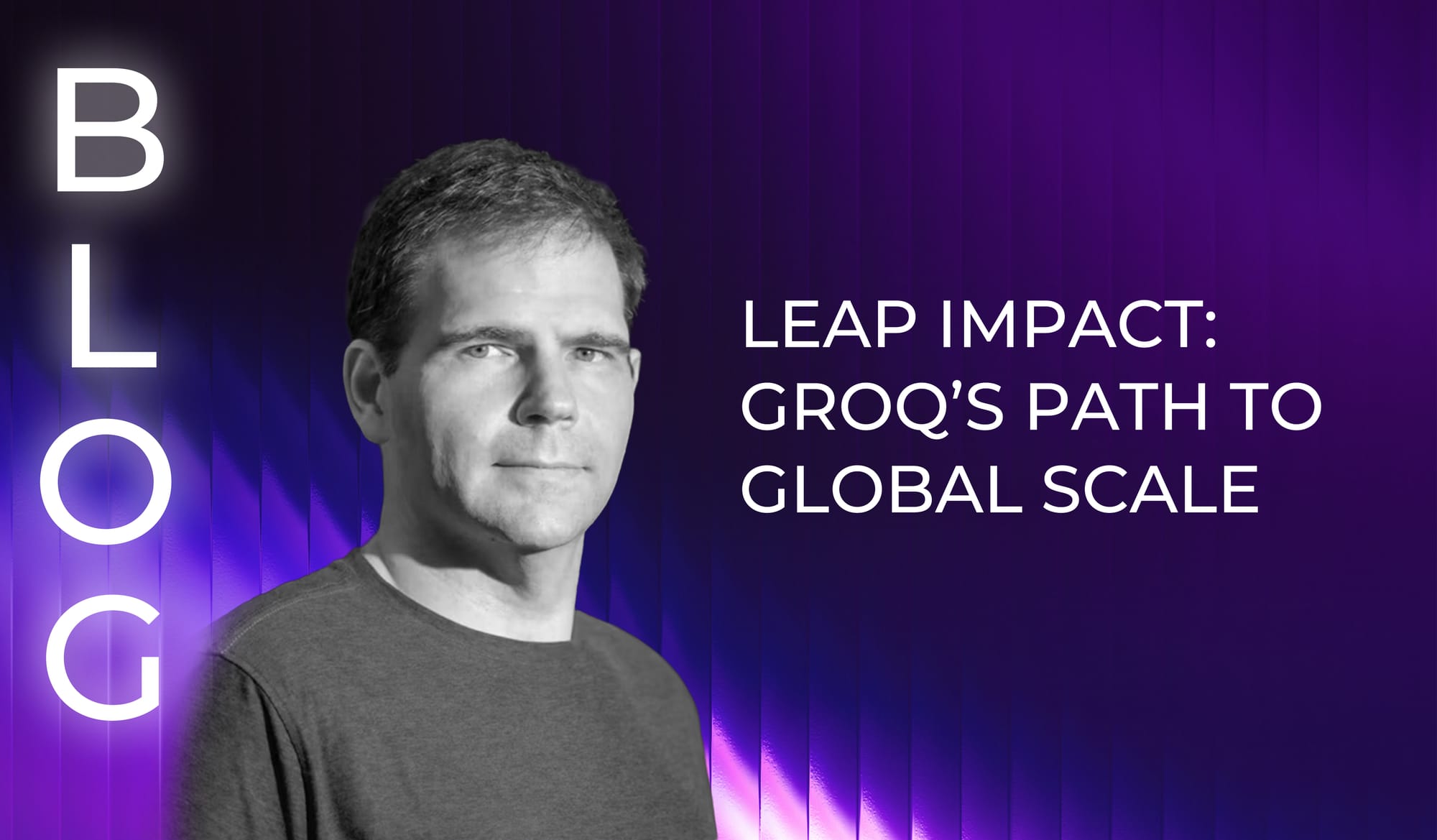
Groq is an AI hardware and cloud company specialising in AI inference – the stage where trained models generate answers in real time for users. Founded by Jonathan Ross, the company designs its own purpose-built processors and runs them through GroqCloud.
The goal is to deliver AI responses faster, more predictably, and at a lower cost than general purpose chips. Groq has hit the headlines lately – because of a strategic licensing agreement with NVIDIA reported at around USD $20 billion, with financial terms undisclosed.
For many observers, this marked Groq’s arrival as a global player in AI infrastructure. But the momentum behind the moment has been building for some time – and much of it unfolded publicly, deliberately, and in Riyadh.
Groq’s Saudi Arabia journey became visible on the LEAP stage.
At LEAP 2024, the company signed a memorandum of understanding on stage, marking the first public milestone in its relationship with the nation. The announcement promised that discussions were moving from exploration into delivery.
That promise strengthened a year later. At LEAP 2025, Groq announced a $1.5 billion commitment from Saudi Arabia to expand delivery of its LPU-based AI inference infrastructure. Reuters independently reported the commitment, noting that funds were expected to be deployed over the course of 2025 and that the announcement formed part of $14.9 billion in AI investments unveiled at LEAP 2025.
“It’s an honour for Groq to be supporting the Kingdom’s 2030 vision,” Ross said at the time. “We are excited to work alongside Saudi innovators to shape the next chapter of AI.”
At LEAP 2025, Groq paired the announcement with evidence. The company demonstrated AI models running live from its data centre in Dammam, including ALLaM, the Arabic-first large language model developed by the Saudi Data and AI Authority. Reuters linked the Dammam expansion directly to supporting ALLaM and broader public-sector use cases.
This live inference from an operational facility showed infrastructure that could already serve real workloads. And for our audience at LEAP, that was exciting.
Execution speed became a defining feature of Groq’s Saudi Arabia story. In a press release, Groq stated that a major inference installation in the Kingdom was brought online in eight days, a figure the company shared as evidence of deployment velocity.
Ross later described building what he called the region’s largest inference cluster in 51 days, referring to the broader end-to-end build process from initial groundwork to operational readiness, as reported by Data Center Dynamics. When you put these figures together, they capture different phases of the same effort: rapid installation supported by an accelerated overall build.
From Dammam, GroqCloud began serving customers across surrounding regions. The company says the location enables access to nearly four billion people across the Middle East, Europe, and South Asia.
We love that Groq’s progress illustrates how LEAP can function as an amplifier for tech firms that are ready to expand in the region.
The first element of this is visibility. Saudi Arabian officials have highlighted the Groq announcement as part of LEAP’s role in positioning the nation as a global AI hub, placing infrastructure commitments in front of ministers, enterprises, and international investors at the same time.
The second element is partnership density. The path from an MoU signed on stage at LEAP 2024 to a $1.5 billion commitment announced at LEAP 2025 shows how concentrated decision-making environments can compress timelines for infrastructure-scale deals.
And the third is proof. Live demonstrations from a functioning data centre transformed abstract capability into something legible and immediate. In compute markets, working systems are far more persuasive than projections.
Against this backdrop, we think Groq’s agreement with NVIDIA carries a deeper meaning. The deal established a non-exclusive licence for Groq’s inference technology, alongside leadership transitions that saw Ross and Sunny Madra (President of Groq) move to NVIDIA. Groq continues operating independently under Simon Edwards, with GroqCloud continuing without interruption.
For the wider market, this arrangement represents a shift that’s already underway. Inference performance now sits at the centre of AI economics, attracting attention from the world’s largest compute players. Groq’s Saudi Arabia chapter (built in public, tested at scale, and amplified through LEAP) helped position the company squarely within that conversation.
As a platform, LEAP reveals which companies and technologies can withstand rapid scaling. Groq stepped onto that platform with a specialised approach to inference, and emerged with partnerships, infrastructure, and global validation.
The next chapters will unfold beyond the stage. But this story shows that if your tech company works hard to make the most of a platform like LEAP, you can turn technical promise into commercial momentum very quickly.
VC investor Vusi Thembekwayo shares why a positive social impact is more important than financial gains – to contribute to a more equitable economy.
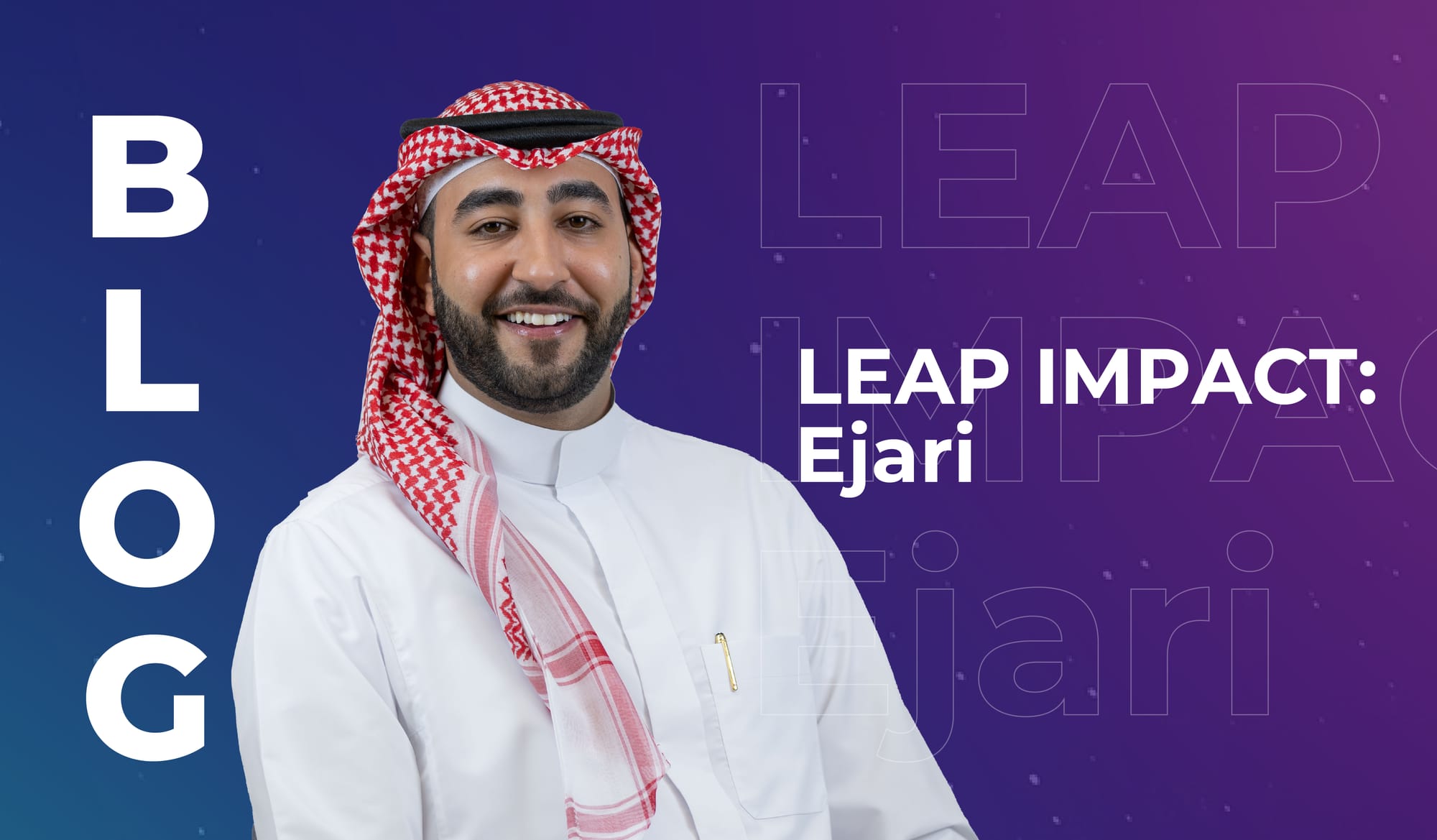
We’re chatting to influential people in the Saudi tech ecosystem. Recently we caught up with Yazeed from Ejari. Ejari is an online platform dedicated to making rentals more affordable and accessible in Saudi Arabia. Yazeed is a Saudi-born entrepreneur who was educated in Britain and began his career in
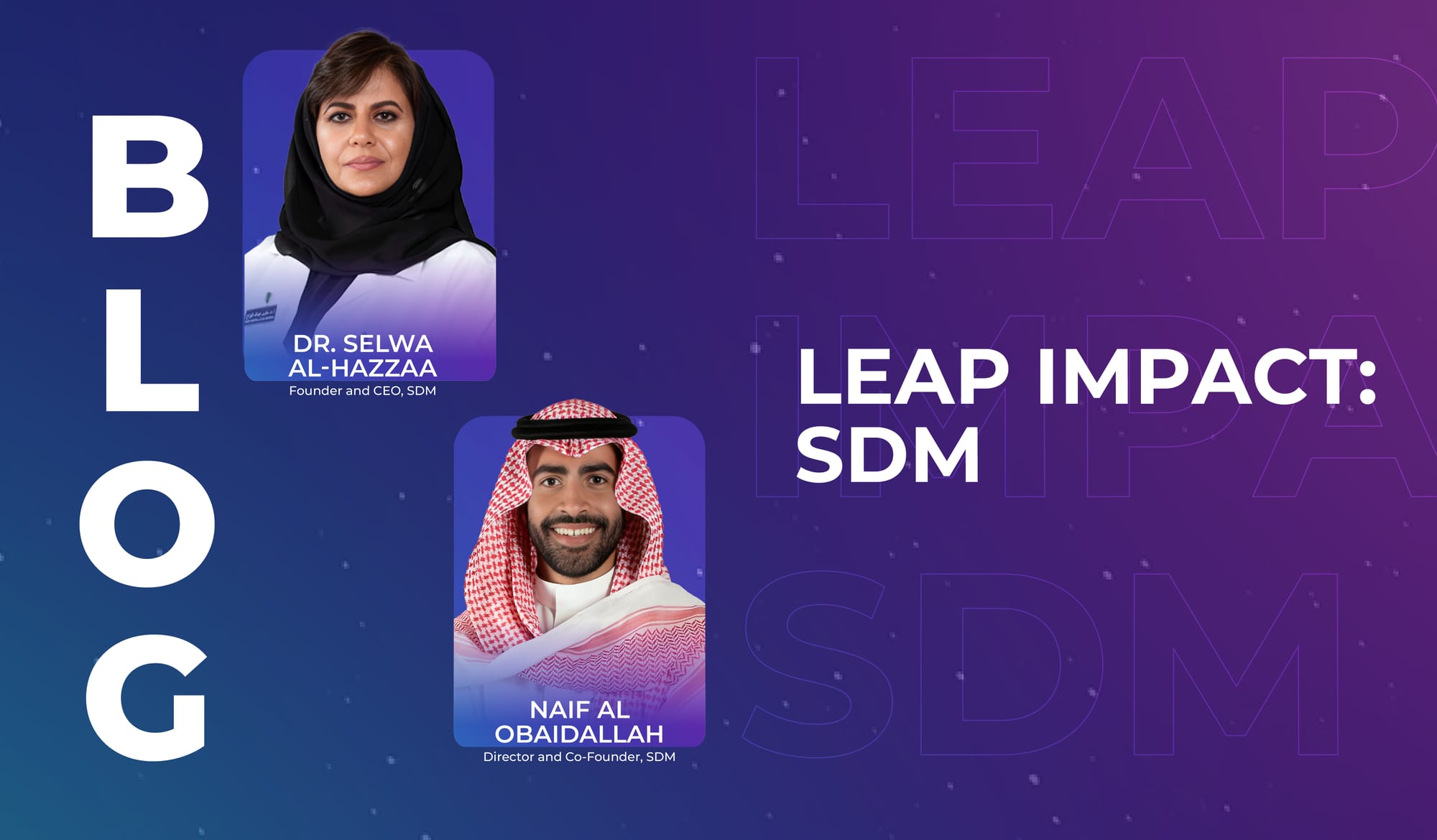
Continuing our series of chats with leaders in the tech startup space, we caught up with Dr Selwa Al-Hazzaa (Founder and CEO) and Naif Al Obaidallah (Managing Director and Co-Founder) from SDM. SDM was founded in 2019 by Dr. Selwa and has grown into one of Saudi's most
VC investor Vusi Thembekwayo shares why a positive social impact is more important than financial gains – to contribute to a more equitable economy.
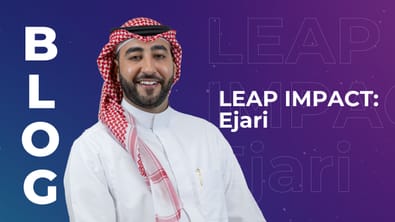
We’re chatting to influential people in the Saudi tech ecosystem. Recently we caught up with Yazeed from Ejari. Ejari is an online platform dedicated to making rentals more affordable and accessible in Saudi Arabia. Yazeed is a Saudi-born entrepreneur who was educated in Britain and began his career in
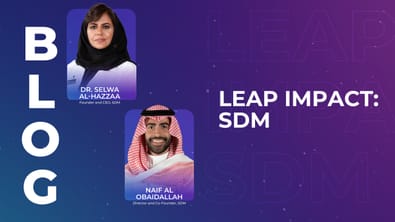
Continuing our series of chats with leaders in the tech startup space, we caught up with Dr Selwa Al-Hazzaa (Founder and CEO) and Naif Al Obaidallah (Managing Director and Co-Founder) from SDM. SDM was founded in 2019 by Dr. Selwa and has grown into one of Saudi's most