
Why would we take you stargazing?
Sometimes the best tech conversations happen under the darkest skies

If you haven’t already, subscribe and join our community in receiving weekly tech insights, updates, and interviews with industry experts straight to your inbox.
Innovate with intention and be inspired by the global LEAP community – in your inbox every week.
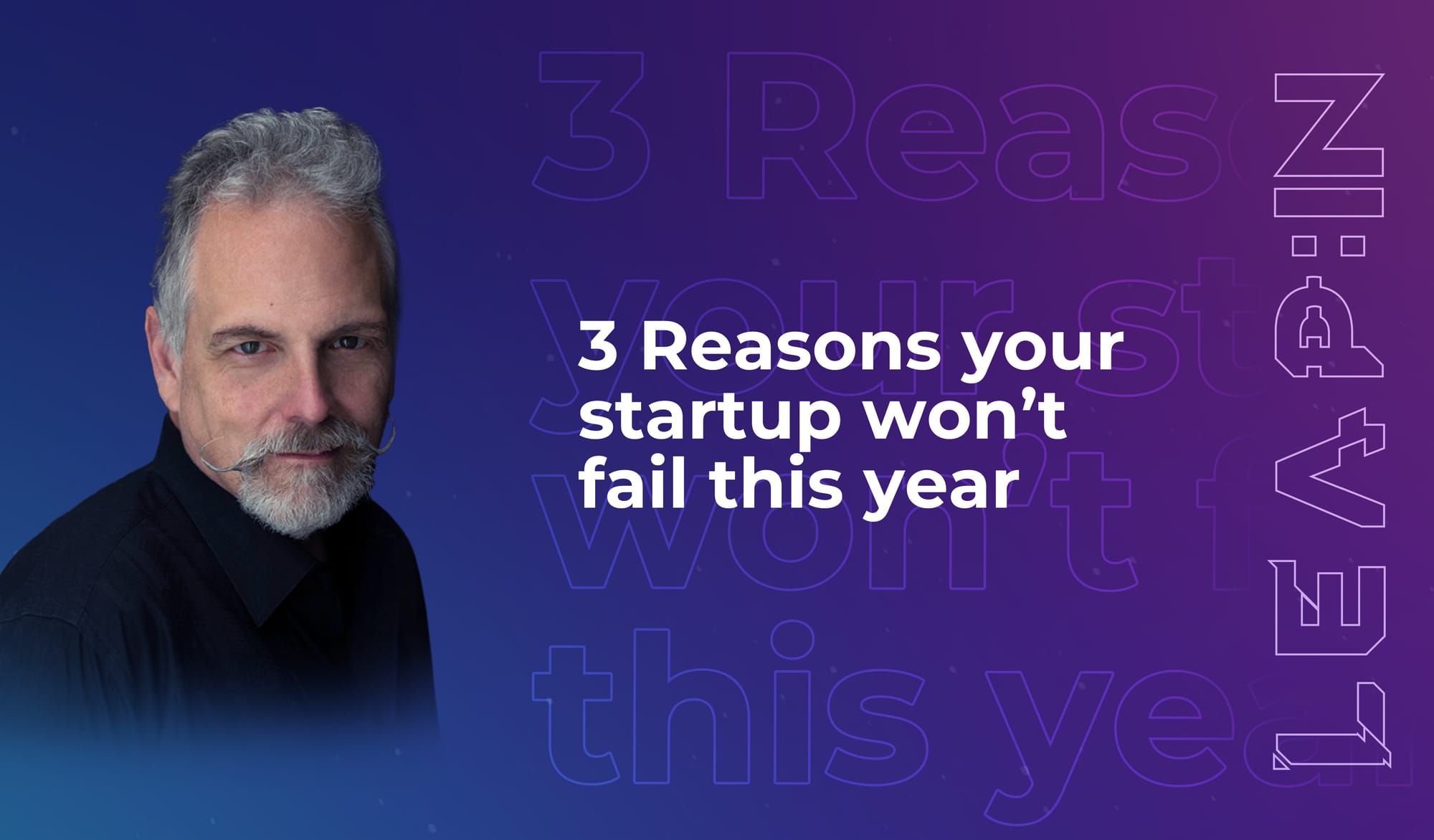
What Wolanow said:
“Emerging tech delivers zero value on its own. It is the new business models that emerging tech makes possible that deliver true change.”
Write it down, print it off, stick it above your desk or on your mirror. Because if the last decade was about what technology could do, the next one is about how it is used – and by whom. The good news is that many of the reasons startups fail are now well understood. Better still, they can be deliberately reversed.
So here are three reasons your startup won’t fail in 2026.
When we asked him to share the top reasons why startups do fail, Wolanow said:
“One, failure to define a business model that significantly improves on the way things are done now.”
In 2026, simply adding new technology to an old structure isn’t enough. Faster workflows, cheaper processing, or smarter analytics are expected, and they’re not differentiation.
The startups that endure are the ones that ask harder questions earlier:
When founders start with business model design (we’re talking pricing, distribution, ownership, and accountability) technology becomes an enabler rather than the headline act. This is especially visible in sectors like fintech, climate, and enterprise software, where incumbents often have the tech but not the flexibility to rethink how money, data or trust moves.
Step away from using the same business model with better tech. Develop a model that rewires behaviour.
Another killer of early stage companies is confusing interest with actual validation.
Wolanow said:
“Two, failure to validate that your innovation will actually be valued by the people it is aimed at helping.”
Demos get celebrated and pilots get meetings, but neither guarantees that someone will care enough to take a risk on you.
The startups that thrive are those that test value early and repeatedly:
And in 2026, validation is less about surveys and more about behaviour. Will someone commit time, reputation or budget (even in a limited way) to make this work? That means more than enthusiasm.
The final failure mode is one founders tend to recognise too late:
“Three, failure to cultivate a network of adopters who are ready to use your innovation before spending money to build it.”
In theory, this sounds obvious. In practice, it’s actually really hard. Talking to future users exposes gaps that can stop you in your tracks. It slows the illusion of progress.
But today, beyond just being a sounding board, your early adopters are co-creators of momentum. They help drive:
Startups that arrive at market with advocates already lined up de-risk growth in the eyes of investors, partners and future customers.
The distance between pilot and production is where it’s easy for startups to stall; but a pre-existing network of adopters shortens that distance dramatically.
If there’s a single thread running through all three points, it’s that intention matters more than invention.
If you’re a founder who designs your business models deliberately, validates value honestly, and cultivates adoption patiently, then this is your year.
Until next week – keep building with purpose.
Have an idea for a topic you'd like us to cover? We're eager to hear it. Drop us a message and share your thoughts.
Catch you next week,
The LEAP Team
Sometimes the best tech conversations happen under the darkest skies

We’re reflecting on people, process, and the work behind five years of LEAP

Sometimes the best tech conversations happen under the darkest skies

We’re reflecting on people, process, and the work behind five years of LEAP