
When AI meets a 1,200-year-old craft
In Kyoto, neural networks are helping revive one of Japan’s oldest textile traditions.

If you haven’t already, subscribe and join our community in receiving weekly tech insights, updates, and interviews with industry experts straight to your inbox.
Discover exclusive interviews and world-changing opinions from the global LEAP community – in your inbox every week.
What Fenner said:
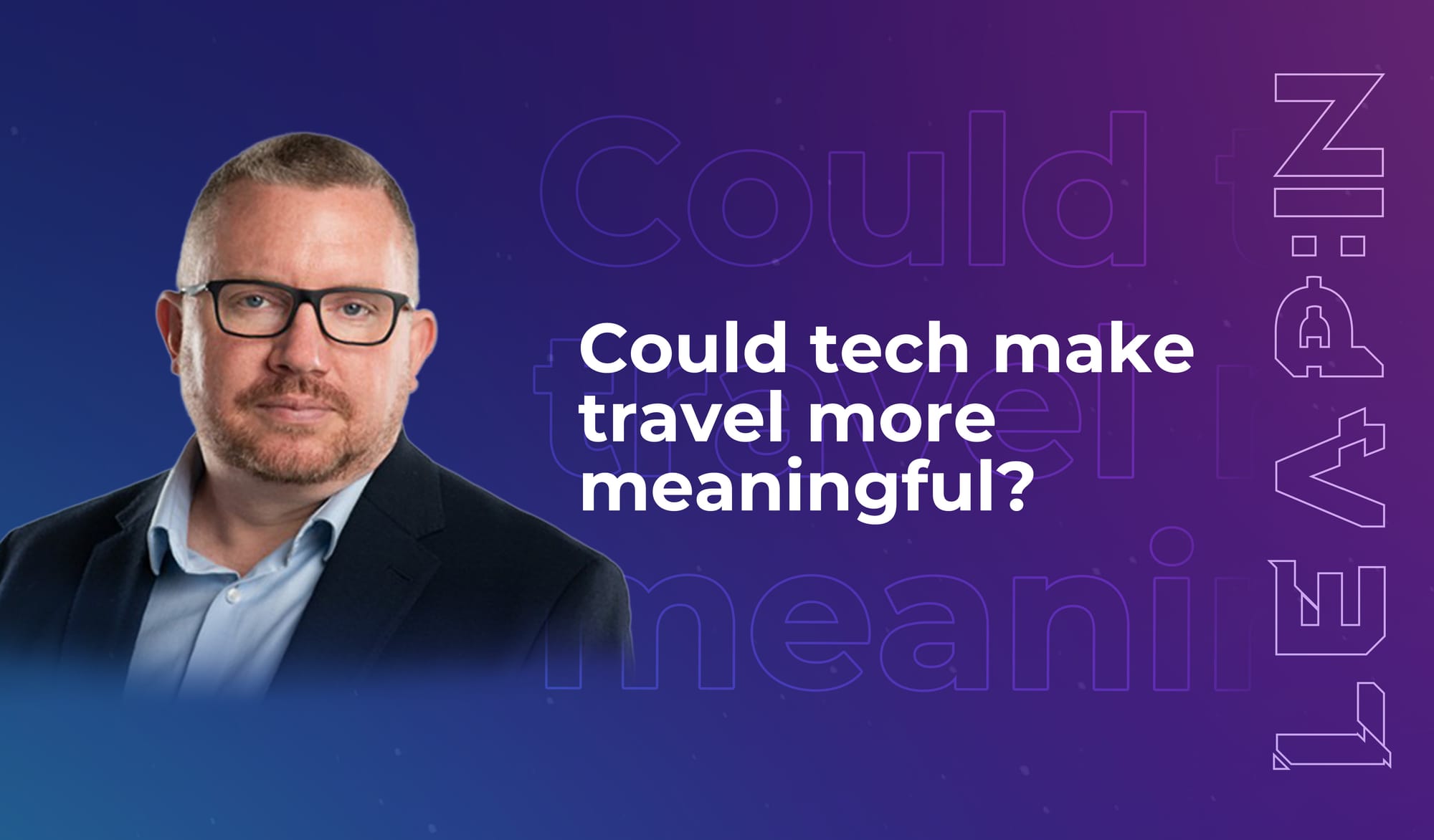
“That’s where I think there is real energy now: using technology not just to make travel easier, but to make it better for travellers and for communities.”
We asked Fenner this question:
If you were founding a travel startup today focused on younger travellers, what problem would you want to solve, or which segment would you be most excited to build in?
Travel has always been about movement – but somewhere along the way, the industry learned to optimise the movement alone, and leave the place behind. The arriving and the being – the experience.
Fenner’s answer started in a different place:
“I would focus on the relationship between travel and the communities where travel takes place.”
That word, relationship, is important here – it’s ongoing and reciprocal, and something that leaves a mark on both sides. And young travellers are already thinking this way:
“... increasingly aware that the choices they make, where they stay, who they book with and what experiences they buy, have real consequences for the places they visit.”
This awareness is spreading beyond one segment. Booking.com’s latest research shows that 53% of travellers are conscious of tourism’s impact on local communities, and 73% want the money they spend to flow back into those places. The instinct Fenner describes is becoming part of the default mindset.
And with awareness comes different kinds of questions.
“They’re asking more questions about where their money goes and whether it benefits local communities or simply extracts value from them.”
Where value goes is becoming a product challenge of its own. Travel platforms have become exceptionally good at helping people choose. You’ve probably made use of filters and rankings, reviews and recommendations to smooth your own path from inspiration to booking. But there’s another layer in between the transaction and its consequences – and Fenner has spent years working in that space between.
“I have worked for many years to connect tourism with the communities it operates in, and I feel very strongly that this is where some of the most important opportunities now lie.”
At a system level, the stakes are clear. The OECD points to tourism’s rebound bringing both opportunity and pressure, with real effects on local communities. When managed well, tourism supports jobs, local businesses and shared prosperity. When it is not, the balance shifts.
Fenner puts it in human terms:
“When tourism works well, it can create jobs, support local businesses, preserve culture and strengthen communities. When it works badly, it can create tension and weaken the very places that make travel meaningful in the first place.”
The difference between those two outcomes often sits in product decisions that feel small at the time. Choices about which options are surfaced and which partners are prioritised; what’s visible, and what isn’t.
“My own career started in hostels,” Fenner added, “and that shaped my view of youth travel profoundly. Some of the guests and people I worked with in those early years are still friends more than twenty years later.”
There is a continuity in that idea – that travel is a way of forming ties, not just consuming places. But as travel scales, it’s easier to get lost in the interface. Meaning fades into listings and logistics, flattened into availability and price.
“That, to me, is the magic of travel: real connections, real cultural exchange, people from different places sharing experiences and learning from each other. We have to make sure that remains a central part of the youth travel experience.”
So what does a product look like when it starts from that premise?
Fenner sketches it out like this:
“So the kind of startup I’d be most excited to build would use technology to make travel more community-connected and more transparent. It would help younger travellers understand the impact of their choices, support local businesses, find experiences that genuinely connect them with destinations and make it easier to travel in ways that are both enriching for them and positive for the places they visit.”
The next generation of travel tech has the potential to help everyone think differently about travel – as something that leaves everyone better and stronger.
At LEAP, these are the ideas changing how technology meets the real world – from travel to cities to the systems in between. Join us in Riyadh from 31 August – 3 September 2026 to learn more.
Have an idea for a topic you'd like us to cover? We're eager to hear it. Drop us a message and share your thoughts.
Catch you next week,
The LEAP Team
In Kyoto, neural networks are helping revive one of Japan’s oldest textile traditions.
How bacteria, AI and IoT are turning infrastructure into responsive systems
In Kyoto, neural networks are helping revive one of Japan’s oldest textile traditions.
How bacteria, AI and IoT are turning infrastructure into responsive systems