
Governance just got cool again (and we’re into it)
The most ambitious markets are treating governance as an opportunity

Insights and inspiration from the global LEAP community – to help you thrive in tech.
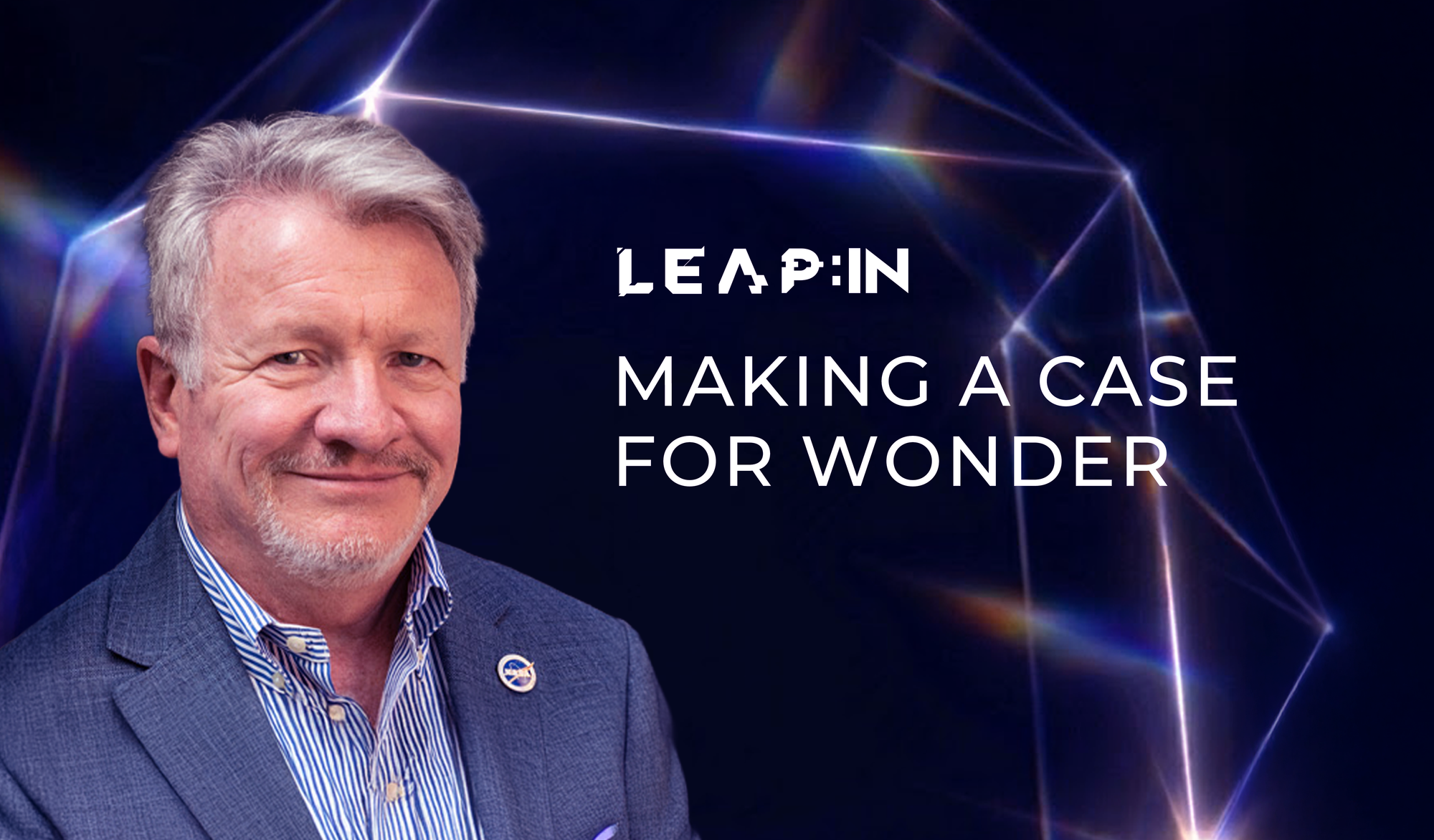
What Diamond said:
“Space exploration and space and Earth science are not only important for what they contribute to our understanding of the natural world and our place in the cosmos. They engage human curiosity and invoke a sense of wonder.”
These words come from a conversation we had with Diamond ahead of a previous edition of LEAP.
In tech, we tend to celebrate things like speed and scale; efficiency and disruption. We measure progress in funding rounds and product launches. Wonder doesn’t make the list, but we think it should – because without it, many of humanity's greatest breakthroughs might never have happened.
Long before someone built the first telescope, they looked up. Long before someone sequenced DNA, they wondered how life worked. Long before rockets reached space, someone asked what lay beyond the horizon.
As adults, lots of us have been taught to dismiss wonder – it’s something for children, not for us. If you give it a chance though, it's one of the most powerful catalysts for discovery.
Curiosity gets a lot of attention in the tech world (and that’s a great thing). But curiosity starts with wonder.
You know it – that fleeting moment when the familiar becomes unfamiliar again. When a problem suddenly feels fascinating instead of frustrating, or when we start asking if there’s a completely different, totally new way to do something.
We don’t get to schedule those moments, but they appear unexpectedly; when inspiration strikes from the world around us, or when we finally take the time to sit still and be quiet for a while.
Psychologists have a name for these small, positive moments that shift our perspective: ‘glimmers.’ Coined by therapist Deb Dana, glimmers are the tiny experiences that create feelings of safety, connection, hope or awe.
Maybe tech breakthroughs are rooted in glimmers too:
Behind every invention is a human being trying to understand something they don't yet understand.
That’s the heart of organisations like the SETI Institute (we wrote about SETI on the blog this week, by the way). Their work expands our understanding of communication, biology, astronomy and, ultimately, ourselves.
So let’s remember to invoke our sense of wonder as often as we can. Let’s protect our capacity for awe and stay open to being surprised – because we need wonder if we want to create change.
At LEAP, we're surrounded by ambitious ideas, and people who are determined to solve difficult problems.
That makes it easy to constantly focus on what’s new and what’s coming next. But every now and then, it’s worth pausing to remember why innovation is so important in the first place.
Because it expands what it means to be human.
So close that pitch deck for a minute, or step away from the prototype. Look up at the sky and give yourself a moment to wonder what’s out there.
Read the blog: We might be searching for aliens the wrong way
The most ambitious markets are treating governance as an opportunity
Two companies arrived at LEAP with very different ambitions. Both left on a larger trajectory.

The internet stopped being a place we visit – and became the environment we live inside.
The most ambitious markets are treating governance as an opportunity
Two companies arrived at LEAP with very different ambitions. Both left on a larger trajectory.

The internet stopped being a place we visit – and became the environment we live inside.