

When AI meets a 1,200-year-old craft
In Kyoto, neural networks are helping revive one of Japan’s oldest textile traditions.

If you haven’t already, subscribe and join our community in receiving weekly tech insights, updates, and interviews with industry experts straight to your inbox.
Explore every side of the most intense debates in tech, and expand your perspective with insights from the global LEAP community.
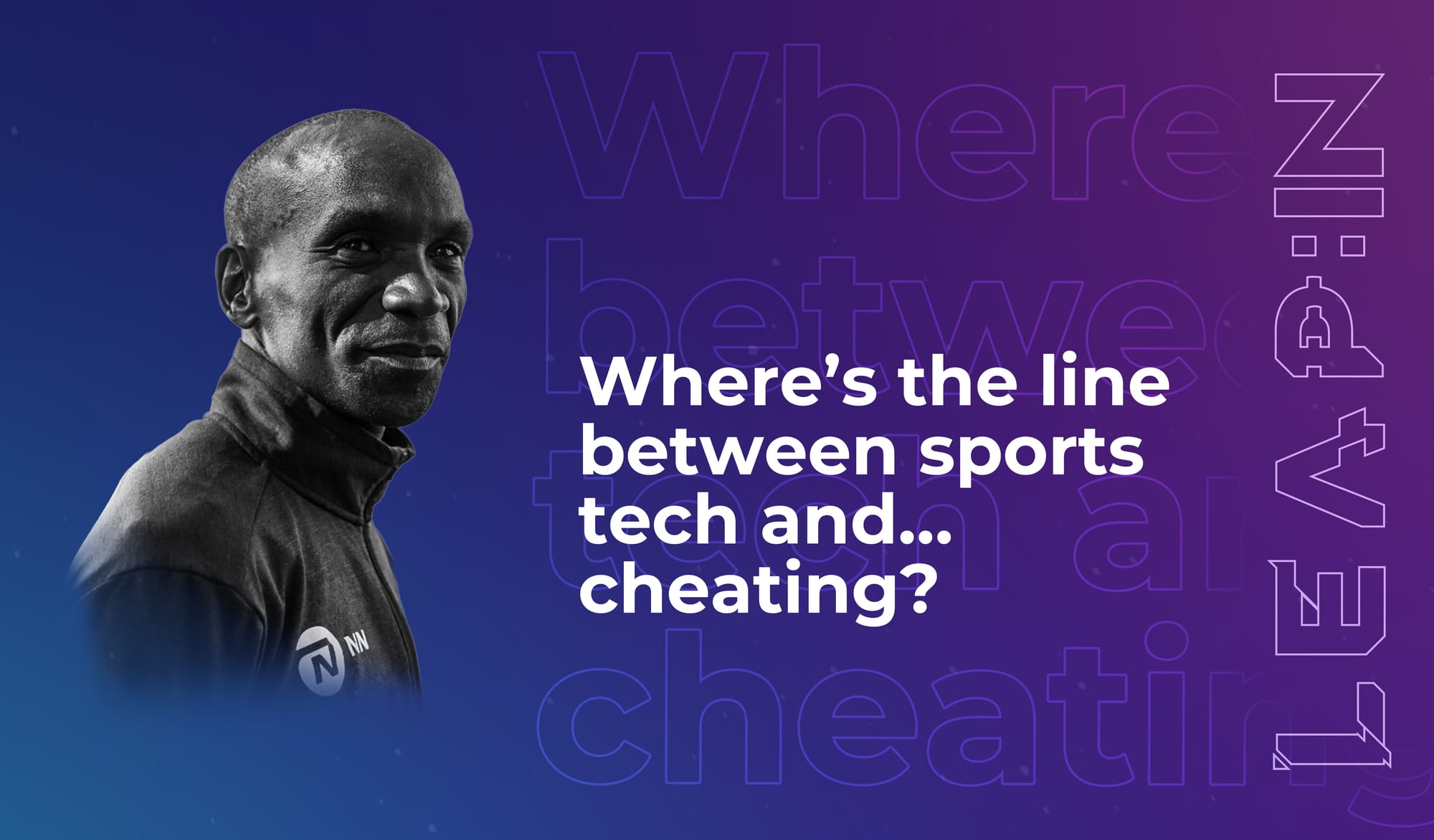
What Kipchoge said:
“If you are not fit enough, you cannot run fast. So first is the fitness, physically fit and mentally fit, and then technology can run with you.”
Kipchoge said these words in an interview during his sub-two-hour marathon campaign – the footage was widely shared on World Marathon Majors promotional channels.
It was in response to the many questions he got about the intense technological support surrounding that sub-two-hour marathon attempt. He spoke calmly, with no defensiveness. But it’s a perspective that sits right at the forefront of one of sport’s most enduring debates: where does human ability end – and where does technological assistance begin?
In 2019, Kipchoge completed a marathon in 1:59:40, making him the first human to run the distance in under two hours. The moment was widely celebrated, and documented in the Netflix film Kipchoge: The Last Milestone (we recommend it if you need some inspiration this week – we loved it).
It was also widely questioned.
The conditions were meticulously engineered. Pacemakers rotated in a formation designed using cutting-edge aerodynamics research tech. The course was selected for flatness and shelter. The support team controlled Kipchoge’s pace with extraordinary precision. And on his feet, he wore Nike’s now-famous ‘super shoes’, designed to return more energy to the runner than anything that came before.
The result was a historic performance. Watching the documentary, we celebrated (in our living rooms) alongside Kipchoge and his team.
But then that question again, popping up in media coverage after the moment: if technology played such a decisive role, does the achievement really belong to the athlete?
This tension isn’t new. Sport has always absorbed technology: better tracks, lighter bikes, improved nutrition, altitude tents, data-driven training. Each wave sparks the same debate, before it becomes normal.
Those running shoes struck a nerve though. Studies suggested that new foam and carbon-plate designs improved running economy by several percentage points. In elite competition, that margin can change who wins.
Regulators responded. World Athletics introduced limits on sole thickness and plate design, attempting to preserve fairness while allowing innovation to continue. So the line moved – but it didn’t disappear.
Kipchoge’s words (the ones we started this newsletter with) remind us that the argument is never actually just about tech. It’s about proportionality. Does the technology reveal human potential – or replace it?
In football, performance analytics shape training loads and injury prevention. In motorsport, software and simulation influence race strategy as much as driver instinct. In esports, reaction time, hardware latency and network infrastructure blur the boundary between skill and system.
Sports tech leaders face a constant balancing act: they have to build tools that elevate performance, without undermining legitimacy.
The most durable technologies tend to fade into the background. When fans stop talking about the tool and start talking about the performance, the balance is usually right.
Kipchoge’s sub-two run wasn’t ratified as an official world record. And yet, we’re pretty sure that very few people really doubt his greatness. The performance expanded our understanding of what the human body can achieve – even if it did force sport to update its rules.
That’s often how progress works in sport. Someone makes a breakthrough, and then regulation follows, and culture catches up later.
We think the real risk lies in extremes. In either rejecting innovation completely, or embracing it without any consideration of what it means for a human to achieve incredible physical feats (and why other humans like watching them do it). In both cases, sport loses something.
We’ve got AI-driven coaching and biometric monitoring and immersive fan platforms – and in the midst of all of it, we’ve still got awe-inspiring physiological talent.
Fitness first and humanity first – with tech alongside.
That principle applies as much to founders building sports tech products as it does to athletes chasing marginal gains.
At LEAP 2026, our Sports Tech Hub offers a home for this debate. It’s where engineers, operators, athletes and fans collide around the question: how much should we augment human ability?
Sport is one of the few realms where excellence is immediately recognisable. As a tech community, our task is to make sure that innovation sharpens that clarity.
Have an idea for a topic you'd like us to cover? We're eager to hear it. Drop us a message and share your thoughts.
Catch you next week,
The LEAP Team
In Kyoto, neural networks are helping revive one of Japan’s oldest textile traditions.

How bacteria, AI and IoT are turning infrastructure into responsive systems

In Kyoto, neural networks are helping revive one of Japan’s oldest textile traditions.


How bacteria, AI and IoT are turning infrastructure into responsive systems