Newsletters
When concrete starts healing itself
How bacteria, AI and IoT are turning infrastructure into responsive systems

How bacteria, AI and IoT are turning infrastructure into responsive systems
After years of software-led growth, tech is shifting toward semiconductors, energy systems, robotics and advanced materials. We’re talking about why hard problems are back, and how ecosystems like LEAP will help solve them.

From NTDP grant to unicorn booth at LEAP 2026, discover how Saudi Arabia proptech startup Ejari scaled through visibility, persistence and ecosystem support.
Sometimes the best tech conversations happen under the darkest skies
Learn why King Abdullah Financial District (KAFD) is where capital, culture and connectivity converge in Riyadh – and join us for a LEAP Nights tour.
After years of software-led growth, tech is shifting toward semiconductors, energy systems, robotics and advanced materials. We’re talking about why hard problems are back, and how ecosystems like LEAP will help solve them.
Learn why King Abdullah Financial District (KAFD) is where capital, culture and connectivity converge in Riyadh – and join us for a LEAP Nights tour.

How LEAP Nights gives you the opportunity to have deep conversations and build trust with the right people.
As LEAP approaches its fifth edition, this is a moment to recognise the people and partnerships that turned an idea into a platform – and to look ahead to what comes next.
Find out how Groq scaled AI inference from the LEAP stage to global relevance, with Saudi partnerships, rapid deployment, and a strategic NVIDIA licensing deal.

Why Saudi Arabia is emerging as a testbed for global sports tech – from smart venues and esports to system-level innovation at LEAP 2026.
LEAP’s fifth edition takes place from 13–16 April 2026 in Riyadh. Explore the available passes and choose the option that best matches how you want to take part.
EXPLORE TICKETS
Step into the theatre as we explore the future of surgical technology and how innovative discoveries are reshaping the way surgeons operate and train the next generation. Join some of the worlds most renowned surgeons as they look to the future of health tech and how technology can change lives
Today, it seems as if you cannot avoid NFTs. The news, social media, business moguls, venture capitalists, and teenagers alike are all buzzing about them. From mid-2021, we have started to see venture capital investment in NFT marketplaces, along with some exclusive NFT-directed funds being established. Now we want to
To celebrate International Women’s Day and the theme #Breakingthebias, we will be looking at exciting projects that are being led by women and how tech is opening opportunities for female leaders. Get first-hand experience from female leaders in the tech industry, including 2019’s Woman of the Year in
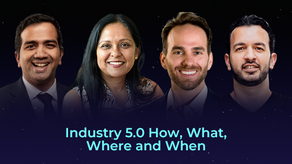
Industry 5.0 is said to already be on the horizon but what is the actual difference between Industry 4.0 vs Industry 5.0? What technologies are at the cusp of the fifth industrial revolution? And what will real personalisation look like in Industry 5.0? Find out from
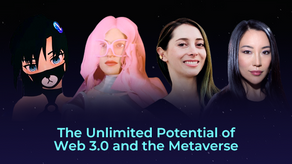
Web 1.0 was static, decentralised, mostly read-only home pages. Web 2.0 is about blogging, social media and e-commerce centralised and owned by tech giants. Web 3.0 is about whatever we want it to become. According to Chris Dixon: “We are now at the beginning of the web3

Digital currencies are all the rage these days and central banks are not immune to their charm. There were more than 7,500 cryptocurrencies by the end of 2021, from around 66 in 2013, and while most are unlikely to survive, they have sowed the seeds of the popularity of
In partnership with Infobip The digitalisation of the banking industry is an ongoing trend that has fundamentally altered the way consumers interact with their banks over the last fifteen years. It all started with moving paper-based statements and transactions online to allowing customers easier access to their financial information through
No-one knows exactly what the future of jobs holds. With new jobs, technology and even industries popping up all the time, all we know is that the next generation of employees need to find a way to prepare for a future workplace that seems to be in a state of
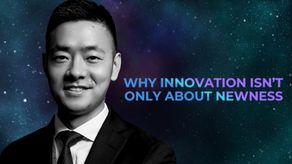
“If technology is not geared and designed to create access and to better the conditions of everybody in society, then what is it for, really?” When we talk about innovation, we usually think of newness. New ideas, new technologies, smart inventions. But as we look into the future and imagine
Data regulation is bitty. Different countries, regions, and even different companies have their own policies, and implement those policies with a level of subjectivity (and often deceptive design) that makes it very difficult for digital citizens to get a handle on when, why, how, and by whom their data is
“We need to find a way to invest in our technological and digital sovereignty. At the same time, we [must be] able to share data in a way that does protect the rights of people, but also allows us to really harness this information.” These were the wise words of
The King Abdullah University of Science and Technology (KAUST) opened on September 23 2009, after an intensive period of building and academic development. “It was a dream to build a university that is leading in terms of science and technology and research, at the shores of the Red Sea,” said
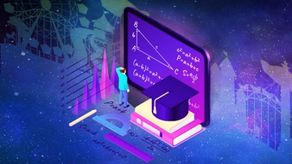
Education has always been a teacher-centric model. Teachers lectured students on key topics and students listened, learned, and were tested on how well they retained knowledge. COVID-19 changed this model. Suddenly, schools were in lockdown mode and students were sequestered at home learning their lessons via technology—smart phones, laptops,