
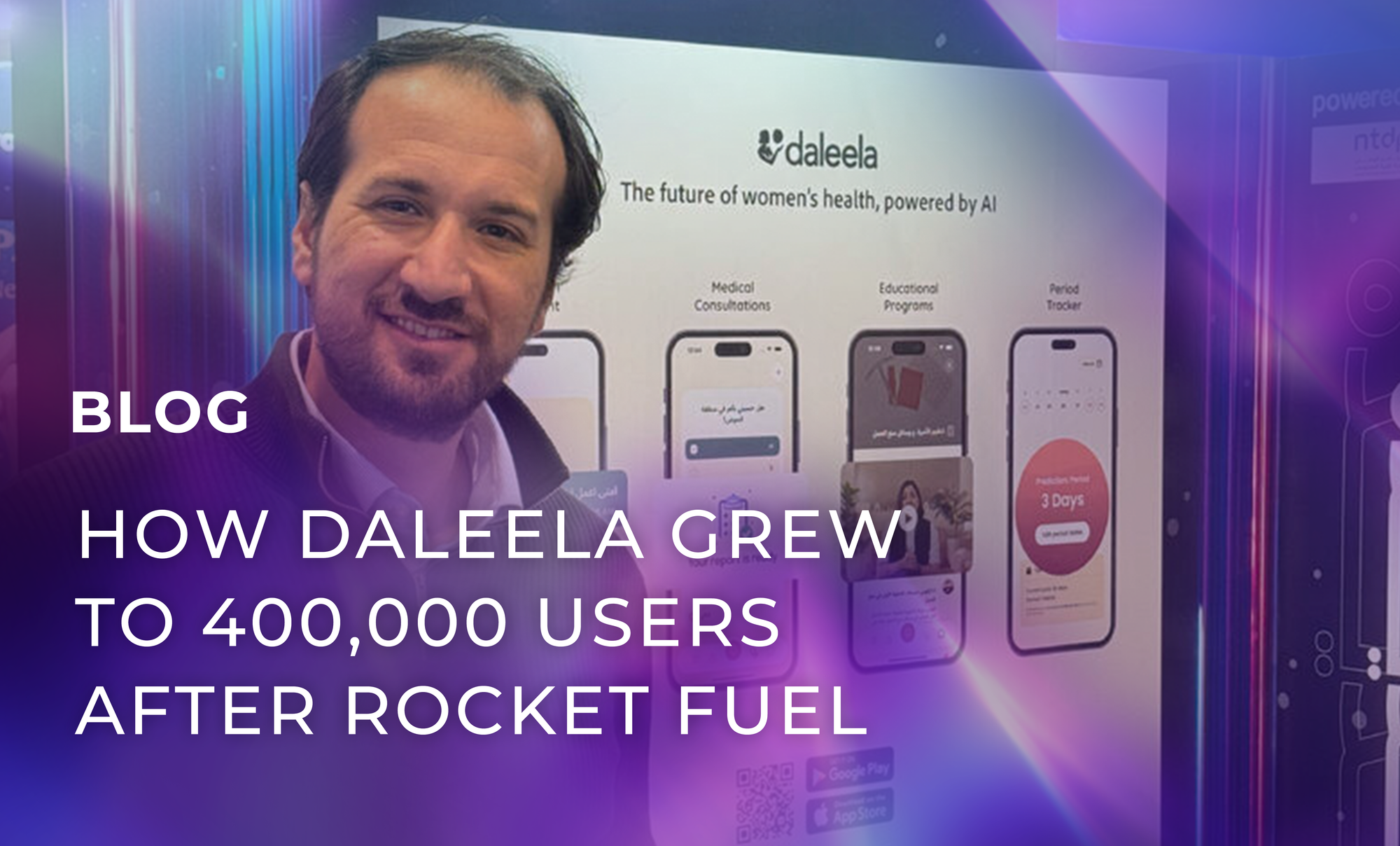
How Daleela grew to 400,000 users after Rocket Fue
Discover how LEAP Rocket Fuel winner Daleela grew to 400,000 users, completed 8,000 consultations and expanded women's healthcare across the region.

Robotics have been on the factory floor for a long time, offering repetitive motion and precision at scale. That picture still holds – but it doesn’t contain the whole story anymore.
Because across industries, robotics is expanding outward into airports, retail environments, restaurants, and much more, with systems designed to operate in settings where conditions change moment to moment.
Every year at LEAP the robots we meet are more capable, and useful. We’re seeing robotics enter a phase that’s defined by deployment at scale – driven by advances in AI and anchored in measurable industrial demand.
The numbers are already significant. As detailed by the International Federation of Robotics (IFR), there were 542,076 industrial robots installed globally in 2024, marking the second-highest annual total on record.
That brought the global operational stock to 4,663,698 robots, up 9% year on year. It’s a strong sign that we’ve taken a big step away from early experimentation into a sustained deployment phase.
Geographically, the centre of scale is concentrated. Asia accounted for 74% of all new installations, with China alone responsible for 54% of global installations in 2024.
The industrial core remains strong, but the composition is evolving. According to the same IFR report, electronics became the largest sector for robot adoption (24%) in 2024, overtaking automotive at 23%.
And simultaneously, robotics is extending beyond traditional manufacturing environments. McKinsey notes that robots are increasingly being deployed in airports, large-format stores and restaurants, moving into environments that require more flexibility and interaction with real-world conditions.
This expansion is enabled by a new layer of intelligence. McKinsey describes robots today as systems capable of operating autonomously or semi-autonomously, adapting to new inputs with increasing dexterity.
The development of foundation models for robotics allows machines to generate responses across a broader range of scenarios – instead of just following fixed routines.
The World Economic Forum describes this evolution as the rise of ‘physical AI’ – systems that combine hardware, AI and vision capabilities to enable machines to perceive, reason and act in dynamic environments.
Underneath the hardware, we’re witnessing the formation of a broader system.
The World Economic Forum identifies three complementary approaches in robotics:
Together, they form a layered approach to physical work, which combines predictability with adaptability.
The pressure to adopt comes from a number of different directions, including rising complexity, workforce shortages, and heightened global uncertainty.
The next phase will rely on effective, efficient deployment across sectors.
We expect to see:
Robotics is becoming embedded across industries – moving from specialised applications into broader operational use.
Join us at LEAP from 31 August – 3 September 2026 to discover the latest in robotics development and adoption.
Discover how LEAP Rocket Fuel winner Daleela grew to 400,000 users, completed 8,000 consultations and expanded women's healthcare across the region.

Discover how Rocket Fuel winner Lisan grew to $2.6 million ARR, secured government customers and scaled Arabic enterprise AI one year after LEAP 2025.
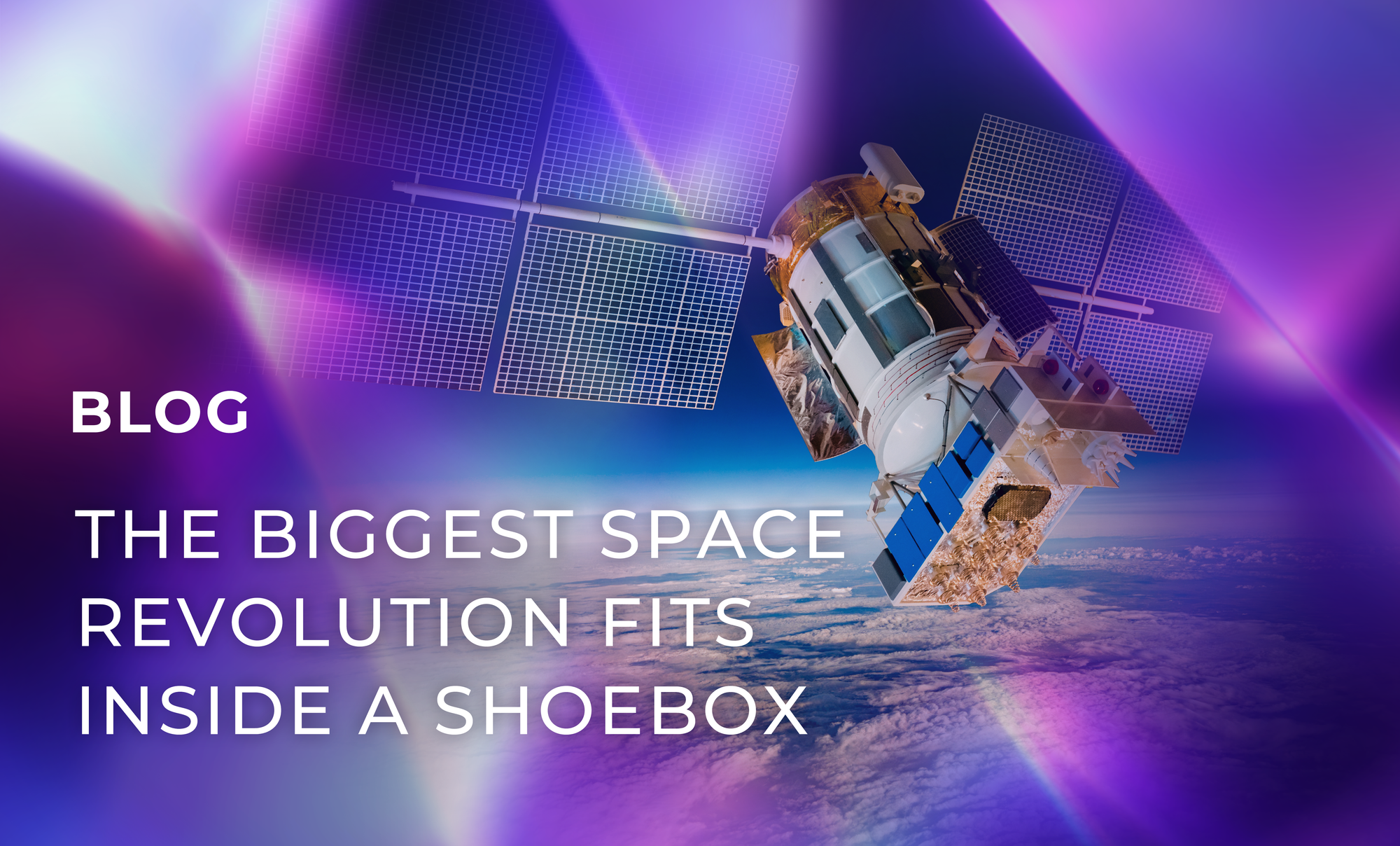
Discover how CubeSats are transforming space technology. From NASA's climate mission to maritime monitoring, these tiny satellites are making a big impact on science and innovation.
Discover how LEAP Rocket Fuel winner Daleela grew to 400,000 users, completed 8,000 consultations and expanded women's healthcare across the region.

Discover how Rocket Fuel winner Lisan grew to $2.6 million ARR, secured government customers and scaled Arabic enterprise AI one year after LEAP 2025.
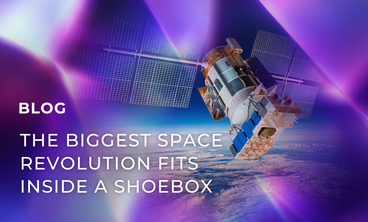
Discover how CubeSats are transforming space technology. From NASA's climate mission to maritime monitoring, these tiny satellites are making a big impact on science and innovation.