

Why we might be searching for aliens the wrong way
Why SETI researchers think we've been listening too narrowly for alien life – and what it teaches us about science, innovation and curiosity.

Funding rounds are snapshots – they don’t tell us everything. One large raise can reflect the strength of a particular company, market or moment, but it doesn’t necessarily show you the direction of an entire industry.
But if you put several recent rounds beside one another, patterns do begin to emerge.
Across six notable raises announced in Q3 2026, more than USD $3.3 billion has flowed into autonomous systems, AI infrastructure, materials discovery, cybersecurity, inference computing and humanoid robotics. The companies range from a Saudi pre-seed startup to businesses valued in the billions.
For investors, these raises hold clues about where capital is landing within the technology stack. More and more, these bets are reaching into the infrastructure, security, scientific capability and physical systems required to move AI from impressive capability towards widespread deployment.
German autonomous systems company Quantum Systems announced a $1.2 billion Series D on 2 July, valuing the company at approximately $8 billion post-money. The round was co-led by Blackstone, Noteus, Airbus and Advent. Quantum Systems said the financing will support greater production capacity, supply-chain resilience, expansion across allied markets and continued investment in software and AI.
The round suggests that European defence technology has moved firmly into the institutional capital conversation. Quantum Systems says it is already profitable and experiencing fast revenue growth, meaning investors are not only underwriting an emerging technology category, but backing a company attempting to industrialise autonomous systems at scale.
And there’s a wider signal here. Autonomy now sits at the intersection of software, AI and advanced manufacturing. For investors assessing European deep tech, those categories are becoming harder to separate – and the ability to build and deploy strategic technology at scale is becoming an investment thesis in its own right.
Saudi Arabia-based Think announced more than $8 million in pre-seed funding on 15 July, co-led by RAED Ventures and Wa’ed Ventures, with participation from Dhahran Techno Valley’s venture capital arm and strategic angel investors. Its platform combines computing hardware with orchestration software designed to maximise GPU utilisation and reduce the cost and complexity of deploying AI workloads.
Beside the billion-dollar rounds in this list, $8 million looks modest. At pre-seed, however, its size is part of the story.
Think points towards capital moving earlier and deeper into AI infrastructure, particularly as organisations seek more efficient and sovereign ways to run AI. The company explicitly positions its technology around helping customers retain greater control over their computing, security and data – while reducing dependence on hyperscale cloud providers.
If you’re an investor watching Saudi Arabia and the wider GCC, it’s also a reminder that the regional technology opportunity is broadening beyond adopting AI towards building parts of the underlying infrastructure that powers it.
Cambridge-based CuspAI raised $450 million in a Series B announced on 20 July, led by Kleiner Perkins and NEA and valuing the company at $2.6 billion. New investors included the UK Sovereign AI Venture Fund, Bezos Expeditions, Glade Brook Capital Partners, Lux Capital, AMD Ventures and Invest-NL.
CuspAI applies AI to materials discovery. Its MIRA platform supports discovery cycles spanning generative materials design, simulation, synthesis planning and experimental validation, with potential applications across semiconductors, clean energy and advanced manufacturing.
From an investment perspective, this represents a different AI thesis from the familiar productivity story. The opportunity is AI as an accelerator of scientific discovery.
If these systems can shorten R&D cycles or identify commercially useful materials faster, AI’s economic value extends well beyond software. It starts to reach industries where progress has traditionally depended on lengthy and expensive experimentation. The potential markets are substantial – though investors also inherit the technical and commercialisation risks that come with deep tech.
Obsidian Security announced an $85 million Series D on 4 August, led by Crescent Cove Advisors and valuing the company at $1.1 billion. The company develops security technology that governs AI agents and other non-human identities operating inside third-party enterprise applications.
This raise illustrates a well-known investment dynamic: when a new technology spreads, new problems (and new markets) form around it.
AI agents are increasingly being given permission not just to generate information, but to access applications and take actions within them. Obsidian says more than 70% of its customers already allow agents into third-party applications – and this creates new questions around identity and permissions.
For investors, agent security could become a picks-and-shovels opportunity: a category in which growth depends on whether autonomous software continues spreading through enterprise systems.
AI-inference hardware company Etched announced a $700 million raise on 18 August at a $21 billion valuation, led by Jane Street after it tested Etched’s hardware. The company also said it had shipped its first rack to Jane Street. Other participants included Kleiner Perkins, Sequoia Capital, Andreessen Horowitz, Peter Thiel, Tiger Global, Bain Capital Ventures and Blackstone.
The investment suggests that inference is becoming a major investment battleground in its own right.
Training AI models has consumed much of the infrastructure conversation, but deploying those models creates another computing challenge: inference, the processing required when a trained model actually generates an answer or performs a task. Etched is building specialised hardware for that workload – and says its ambition is to operate inference at very large scale.
So instead of just asking who can build increasingly capable models, investors need to ask who can make intelligence economical enough to deploy widely. The opportunity is significant, but so are the execution demands: Etched itself points to factories, global supply chains and fleet software among the challenges it faces as production scales.
On 24 August, XPeng announced that its robotics business had raised more than $900 million in its first funding round, at a post-money valuation above $6.3 billion. IDG Capital led the round, with participation from Gaorong Ventures and support from Tencent and Alibaba as strategic investors.
The funding will support robotics hardware and software R&D, physical AI model development, data generation, mass-production facilities and global expansion. XPeng says its IRON humanoid robot is expected to enter mass production by the end of 2026, with its official launch and deliveries in China and overseas markets planned for 2027.
This may be the clearest sign that the AI investment story is acquiring a physical dimension.
Far from just performing an impressive demonstration, robotics now has to prove commercial value through manufacturing, reliability, data, economics and repeatable deployment. Companies that can combine AI expertise with established supply chains and production capabilities could have very different advantages from the ones that defined the software era.
These six rounds hint at a shift worth watching. Capital is still following AI, but it’s reaching towards the systems that make intelligence usable, secure, economical and physical.
If you’re an investor, that widens the field quite a bit. The next generation of AI value may emerge in the chips underneath the model itself; in the security around it, the science it accelerates, and the machines through which it enters the physical world.
Why SETI researchers think we've been listening too narrowly for alien life – and what it teaches us about science, innovation and curiosity.

Discover what synthetic data is, why organisations are using it to train AI, and how it could help solve privacy, bias and data scarcity challenges.
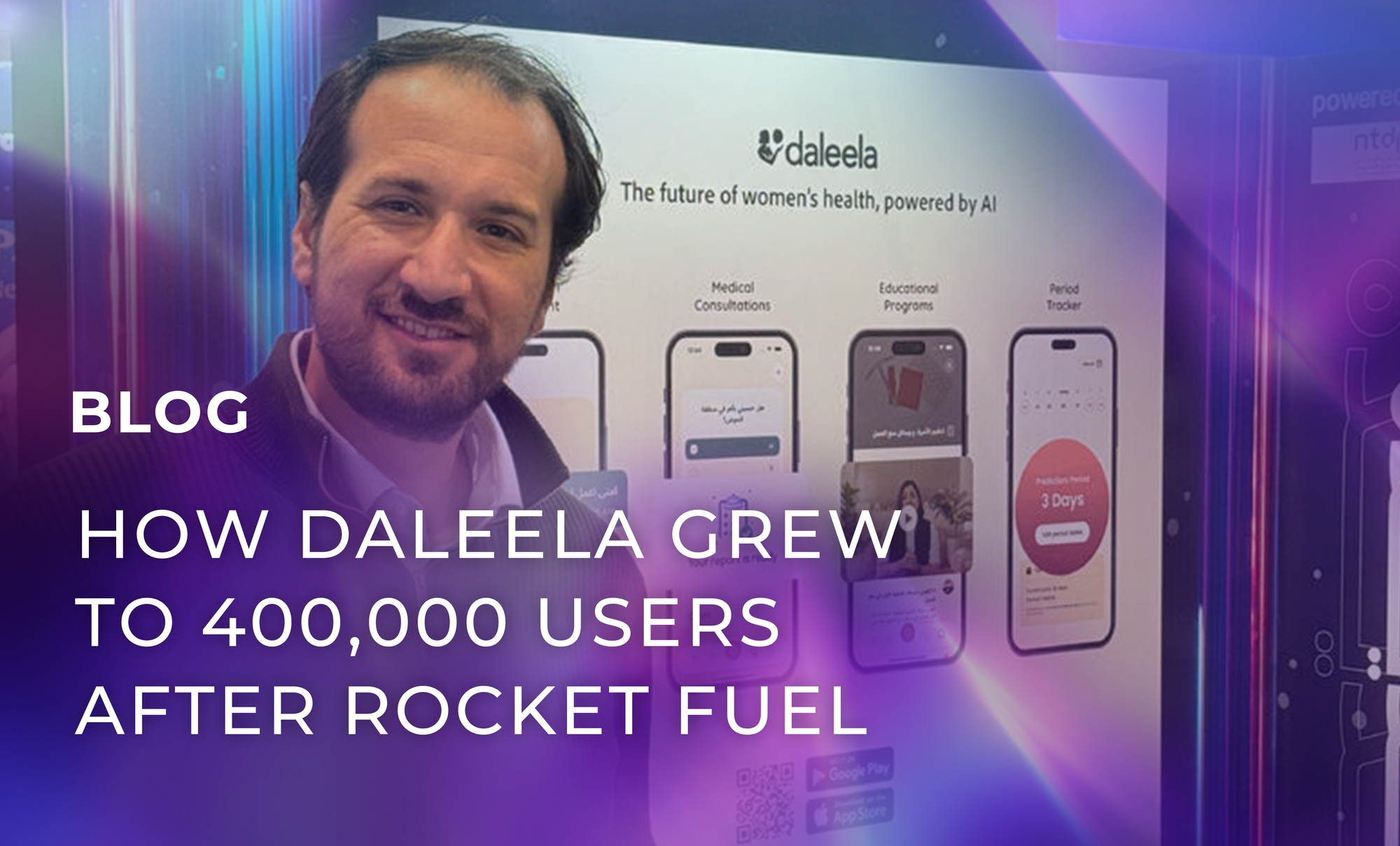
Discover how LEAP Rocket Fuel winner Daleela grew to 400,000 users, completed 8,000 consultations and expanded women's healthcare across the region.

Why SETI researchers think we've been listening too narrowly for alien life – and what it teaches us about science, innovation and curiosity.

Discover what synthetic data is, why organisations are using it to train AI, and how it could help solve privacy, bias and data scarcity challenges.

Discover how LEAP Rocket Fuel winner Daleela grew to 400,000 users, completed 8,000 consultations and expanded women's healthcare across the region.