
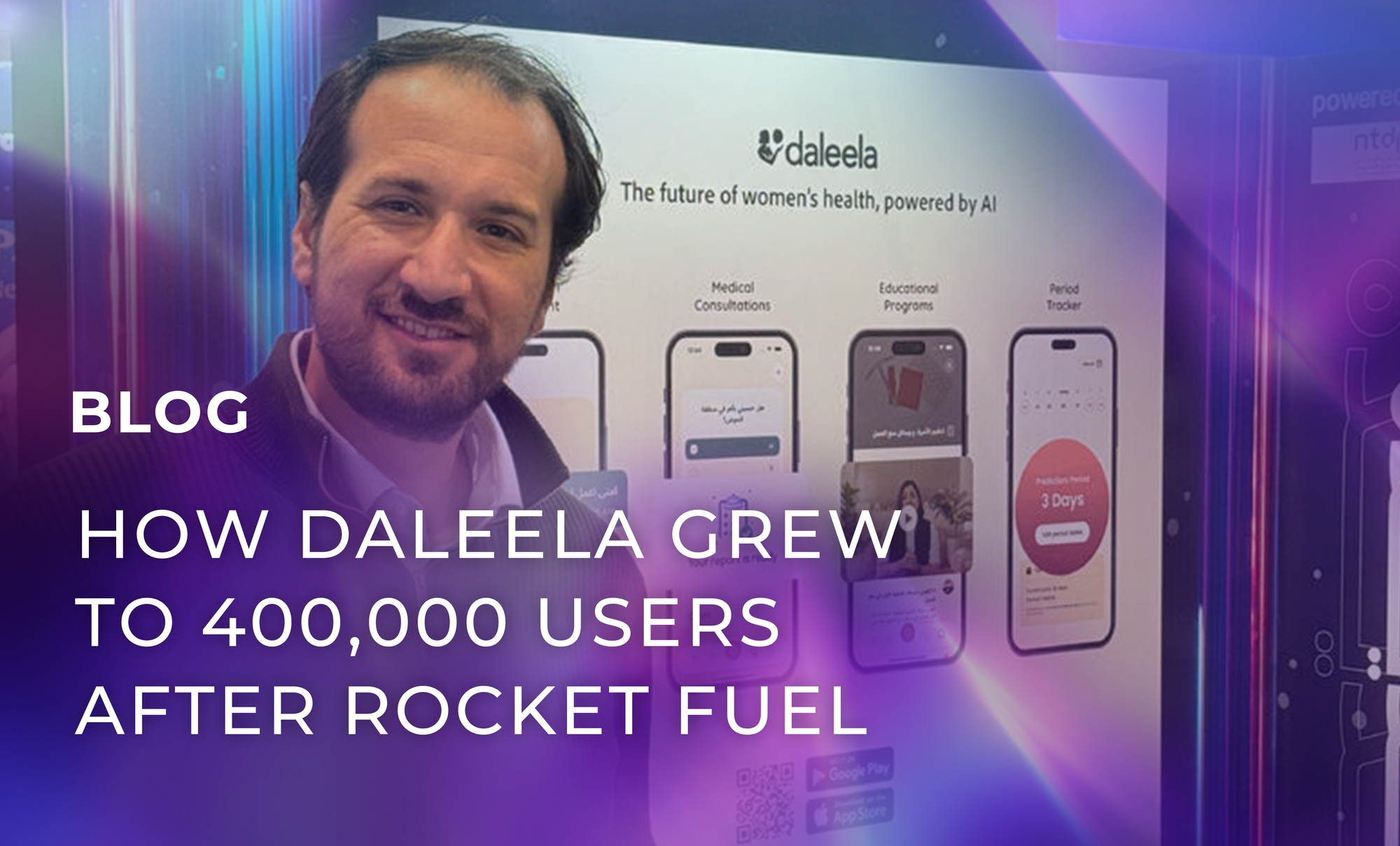
How Daleela grew to 400,000 users after Rocket Fue
Discover how LEAP Rocket Fuel winner Daleela grew to 400,000 users, completed 8,000 consultations and expanded women's healthcare across the region.


Across industries, we’re using AI to transform the way we do everything from building products to detecting fraud, and even diagnosing disease. But to do anything with AI, we need data – and specifically, we need high quality data that can be shared safely and represents the right scenarios.
That’s leading a growing number of organisations to explore synthetic data.
As described by MIT News, synthetic data is generated by algorithms or mathematical models to reproduce the statistical properties of real-world data, rather than being collected directly from real events or people. Unlike traditional datasets, it’s created specifically for analysis, testing or training AI models.
So, could data that never existed become just as valuable as data collected in the real world?
There’s plenty of information out there. But organisations are struggling to find usable information.
Privacy regulations often prevent sensitive customer or patient data from being shared. Some events are so rare that there simply aren't enough examples to train reliable AI systems. And collecting, cleaning and labelling data can be both expensive and time-consuming.
MIT highlights fraud detection as a strong example. Because genuine fraudulent transactions make up only a tiny fraction of all banking activity, there may not be enough real examples for an AI model to learn from effectively. Synthetic data can supplement these rare cases, helping models recognise patterns that would otherwise be underrepresented.
And the same article notes that synthetic data can also reduce some of the time and cost involved in developing AI systems by reducing the need to collect and manually label large quantities of real-world data.
The word ‘synthetic’ can be misleading – as though the data is somehow fabricated or less trustworthy.
In reality, synthetic data is designed to mirror the patterns and relationships found in real datasets while reducing the exposure of sensitive information. When generated and evaluated carefully, it allows organisations to work with representative datasets without relying directly on identifiable records.
This has particular relevance in sectors like healthcare.
A 2024 review published in Nature Reviews Bioengineering found that synthetic data has the potential to help address:
The authors also found that synthetic datasets can be designed to simulate previously unseen scenarios, or include additional examples representing groups that are often missing from real-world data.
So synthetic data is valuable because it can help fill the gaps where real-world data falls short.
Research from Gartner suggests many organisations are still struggling to build the data foundations AI depends on. In a survey of 1,203 data management leaders, 63% said they either didn't have, or weren't sure they had, the right data management practices for AI.
Gartner also predicts that throughout 2026, organisations will abandon 60% of AI projects that aren't supported by AI-ready data.
That's where synthetic data enters the conversation. When organisations can't access enough high-quality, representative or privacy-safe data, generating carefully validated synthetic datasets can help bridge the gap – provided those datasets are rigorously tested against real-world conditions.
Synthetic data isn't a shortcut to better AI, and it shouldn’t be treated as such.
Every credible source we found on the subject makes the same point: synthetic data still needs rigorous evaluation against the real world.
MIT researchers caution that simply creating data that looks statistically similar to real data doesn't guarantee that AI models trained on it will perform reliably in practice. They also note that biases present in the original data can still be reproduced in synthetic datasets if they aren't carefully identified and addressed.
So rather than replacing reality, synthetic data is a way to expand reality in a responsible way. It’s another useful new tool – but it’s not a replacement.
The idea of ‘fake’ data captures people’s attention. But we think the most interesting thing about it is this: it allows organisations to explore situations that reality alone can't easily provide.
Real-world data remains the foundation of trustworthy AI. But as organisations push AI into more industries and more complex problems, synthetic data is becoming a valuable companion.
Want to expand your perspective and grow your tech industry knowledge every week? Subscribe to our newsletter – LEAP:in.
Discover how LEAP Rocket Fuel winner Daleela grew to 400,000 users, completed 8,000 consultations and expanded women's healthcare across the region.

Discover how Rocket Fuel winner Lisan grew to $2.6 million ARR, secured government customers and scaled Arabic enterprise AI one year after LEAP 2025.
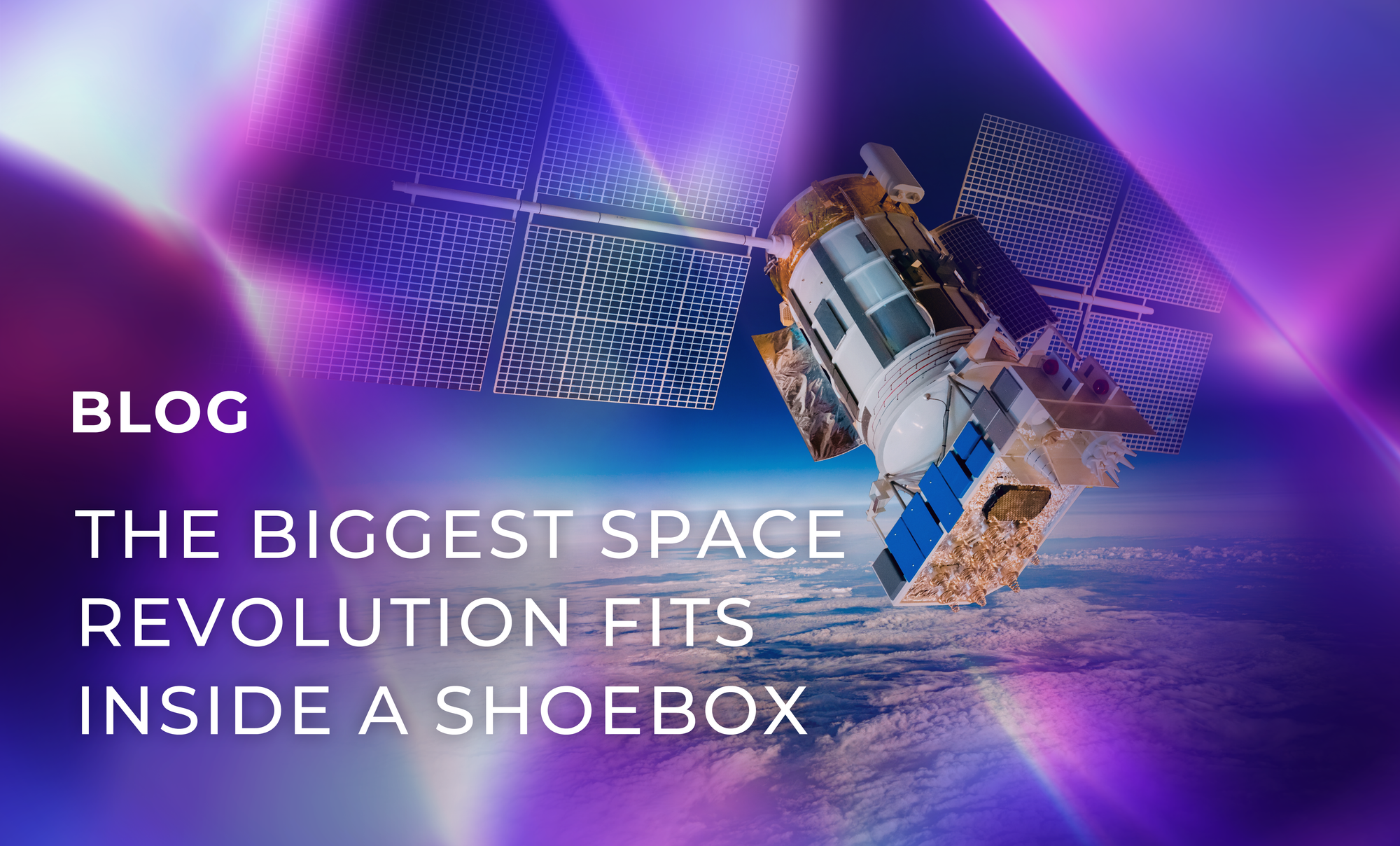
Discover how CubeSats are transforming space technology. From NASA's climate mission to maritime monitoring, these tiny satellites are making a big impact on science and innovation.
Discover how LEAP Rocket Fuel winner Daleela grew to 400,000 users, completed 8,000 consultations and expanded women's healthcare across the region.

Discover how Rocket Fuel winner Lisan grew to $2.6 million ARR, secured government customers and scaled Arabic enterprise AI one year after LEAP 2025.
Discover how CubeSats are transforming space technology. From NASA's climate mission to maritime monitoring, these tiny satellites are making a big impact on science and innovation.