
When is synthetic data more useful than the real thing?
Discover what synthetic data is, why organisations are using it to train AI, and how it could help solve privacy, bias and data scarcity challenges.

Technology has given us tools to use at work for a long time. But now, AI is starting to be treated as part of the workforce itself – not just as something employees use.
In Saudi Arabia, we’re seeing this change happen quickly. KPMG’s report on Saudi Arabia tech notes that digital workforce capacity (including AI agents, robotic process automation, and low-code bots) is expected to rise from 24% of technology team capacity today, to 34% within two years.
At the same time, reliance on traditional external contractors is expected to decline, while permanent internal teams remain the core anchor of enterprise capability. The picture emerging is not one of humans being replaced wholesale, but of companies building hybrid workforces where people and AI systems can operate side by side.
The report describes this as a move toward ‘hybrid human and digital capacity’.
That phrasing is useful; it shifts the conversation away from the question of whether AI will take jobs. The more immediate reality is more subtle, and perhaps more transformative: jobs themselves are changing shape.
Saudi Arabia’s business leaders appear acutely aware of this transition, with 94% of respondents agreeing that managing AI agents will become an important skill within five years. Meanwhile, 89% say traditional KPIs are no longer sufficient for measuring AI-enhanced performance.
That last point could prove particularly significant. Most companies still measure productivity using frameworks designed for fully human workflows: hours worked, output completed, utilisation rates, delivery cycles. But AI changes the rhythm of work. A single employee equipped with effective AI systems may produce the output of a much larger team.
Equally, poor orchestration can create noise rather than value. The challenge now is learning how to manage intelligence that moves at machine speed while still requiring human judgement.
Interestingly, Saudi organisations appear relatively open to that transition. Only 7% of respondents say leadership discourages employees from using AI in daily tasks. This suggests a market moving beyond fear-based conversations about AI adoption, and engaging in more practical discussions around governance, skills, and operational integration.
This kind of flexibility is something Yasmin Khowaiter (Founder and Host, The Majlis Podcast) spoke about in our conversation with her last year:
“There also has to be an understanding that we are moving fast and adjusting as we go. It's significant, and I am thankful, that we do not have a government that doubles down on an idea if it becomes clear that there are other, better avenues to explore. To the untrained eye it may look like a misstep, but the ability to pivot is what will make the Kingdom successful.”
The report also highlights near-universal investment in agentic AI systems, alongside strong expectations for AI-driven ROI over the next 12 months.
But one of the details that stands out to us is that Saudi organisations are not framing AI primarily as a novelty. Again and again, the report returns to the language of execution: productivity, operational efficiency, resilience, scaling capability.
That suggests a mindset that’s set up for success. Globally, lots of organisations are still treating AI as a layer added onto existing systems. In Saudi Arabia, there are growing signs that enterprises are beginning to redesign workflows and operating models around AI from the ground up.
The future workforce may have a strong human core and a growing layer of AI agents – with new leadership expectations, new metrics for performance, and new questions around trust and governance.
In that sense, AI is becoming less like software installed into a business – and more like a new organisational language spreading through it. And like any language, the companies that learn to speak it early will find themselves moving faster than everyone else.
Join the conversations shaping the future of AI, enterprise transformation, and workforce design at LEAP 2026. Get your pass now – we can’t wait to meet you in Riyadh.
Discover what synthetic data is, why organisations are using it to train AI, and how it could help solve privacy, bias and data scarcity challenges.
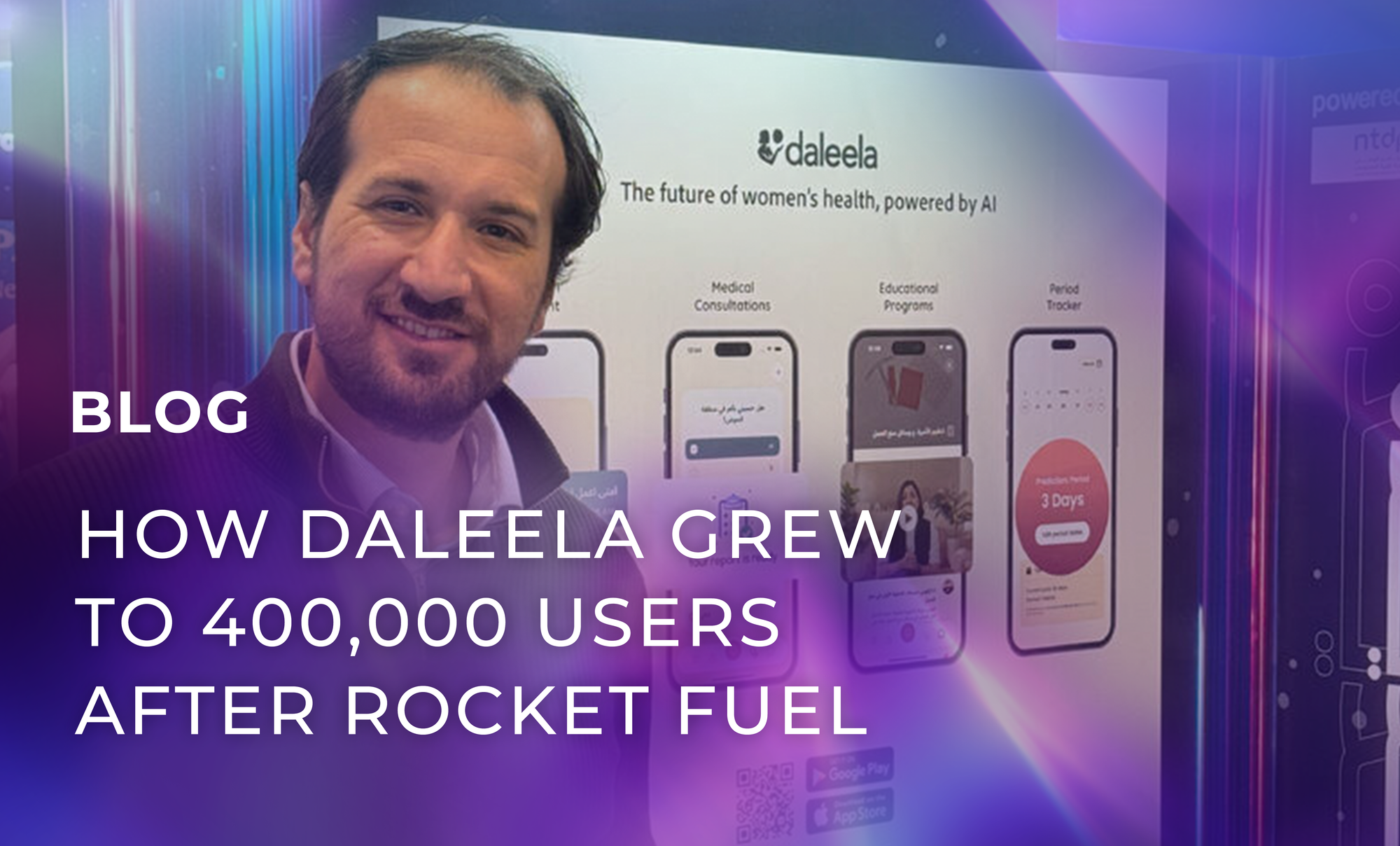
Discover how LEAP Rocket Fuel winner Daleela grew to 400,000 users, completed 8,000 consultations and expanded women's healthcare across the region.
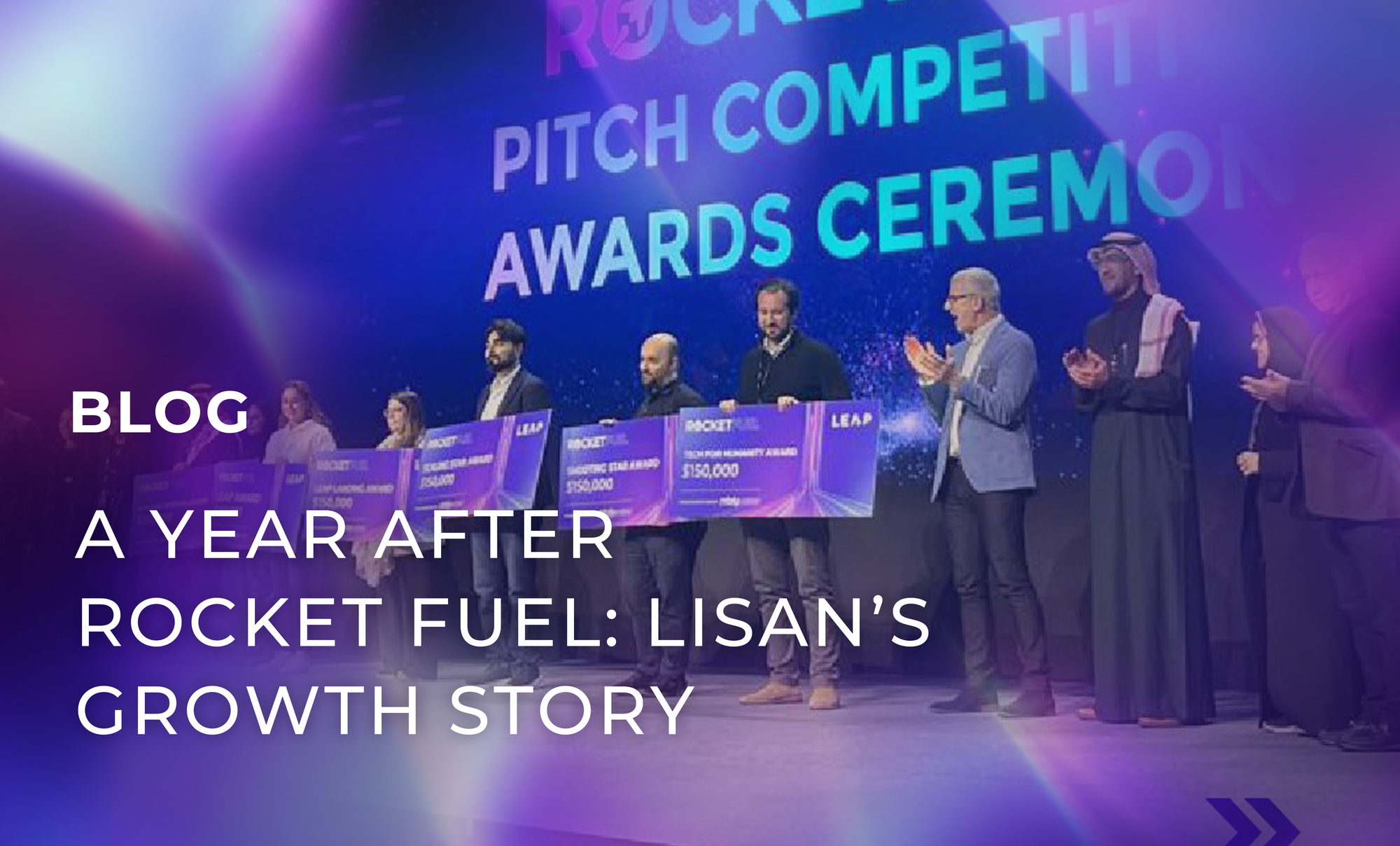
Discover how Rocket Fuel winner Lisan grew to $2.6 million ARR, secured government customers and scaled Arabic enterprise AI one year after LEAP 2025.

Discover what synthetic data is, why organisations are using it to train AI, and how it could help solve privacy, bias and data scarcity challenges.
Discover how LEAP Rocket Fuel winner Daleela grew to 400,000 users, completed 8,000 consultations and expanded women's healthcare across the region.
Discover how Rocket Fuel winner Lisan grew to $2.6 million ARR, secured government customers and scaled Arabic enterprise AI one year after LEAP 2025.