
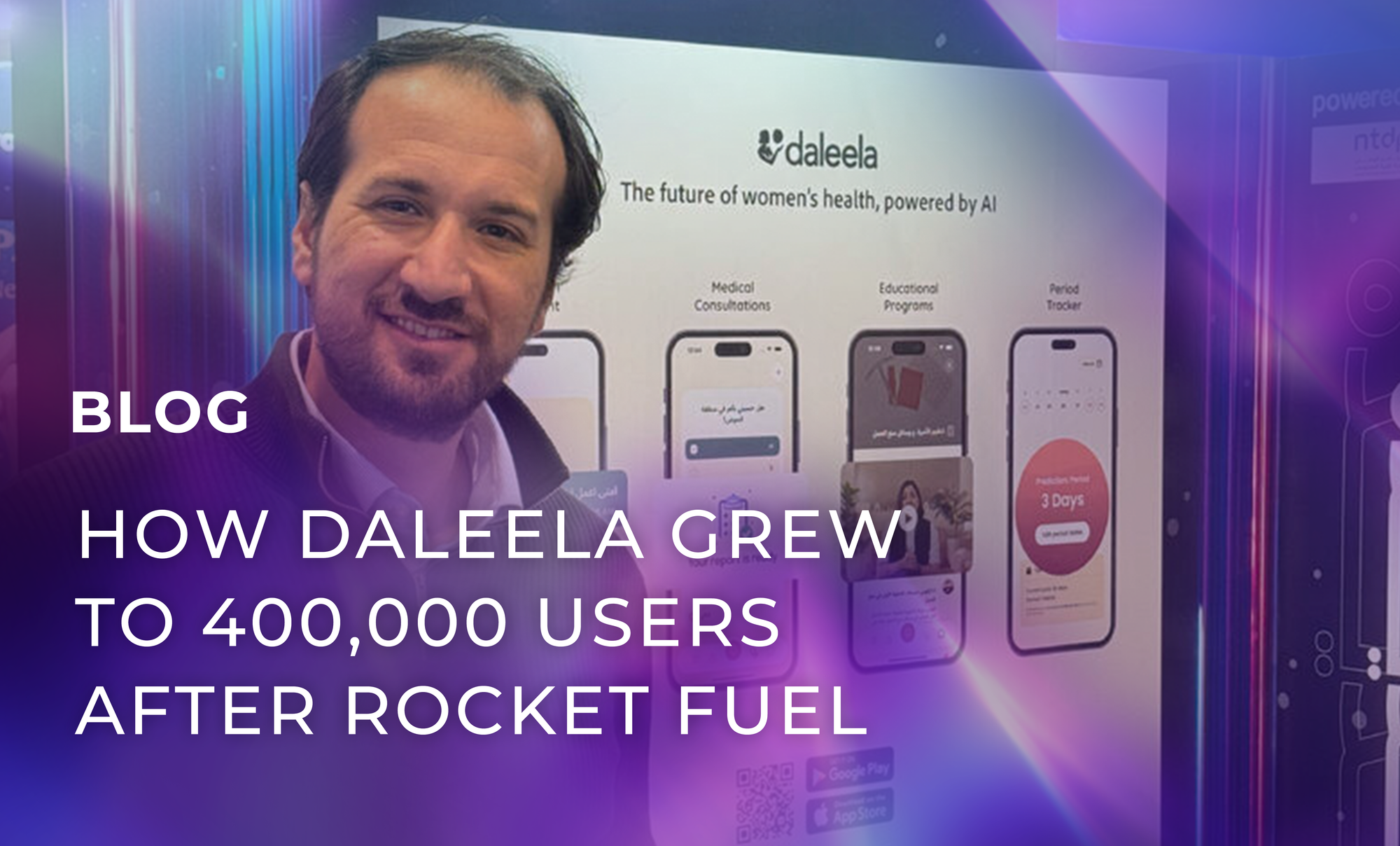
How Daleela grew to 400,000 users after Rocket Fue
Discover how LEAP Rocket Fuel winner Daleela grew to 400,000 users, completed 8,000 consultations and expanded women's healthcare across the region.

GlobalData’s latest forecast sets the long-term trajectory: wearable tech was worth USD $117.4 billion in 2024 and is projected to reach $232.2 billion by 2030. Growth is expected to come from hearables and smartwatches, supported by demand for health monitoring and AI-enabled tools.
That’s the horizon – but the near-term picture is steadier. According to International Data Corporation (IDC), global wearable shipments rose 9.1% in 2025 to 611.5 million units, with a further 2.2% increase forecast for 2026, reaching 625.2 million units. By 2030, shipments are expected to approach 690 million units.
Growth continues – just at a more measured pace than the early smartwatch boom.
Instead of a dramatic peak, we’re seeing the market change shape.
IDC data shows:
This shows it’s no longer a single-device story. Wearables are fragmenting into multiple form factors (rings, earbuds, bands), each solving a more specific problem.
Today, growth is less about owning the wrist, and more about embedding into behaviour.
Despite the market size, venture funding tells a more restrained story.
Data from Crunchbase suggests wearable startups have historically attracted less than 1% of total venture funding in a given year.
That means this isn’t a hype cycle fuelled by indiscriminate capital. Instead, funding is concentrated – and when it shows up, it shows up in size.
In 2026, the volume of deals isn’t as significant as the scale of conviction.
Look at ŌURA, for example. In October 2025, the company raised more than $900 million at an approximately $11 billion valuation. It reported 5.5 million rings sold, with over half of those sales in the past year alone.
This is a bet on much more than hardware: continuous health tracking, high engagement, and a form factor that quietly fits into daily life.
Then there’s Whoop. In March 2026, it announced a $575 million Series G at a $10.1 billion valuation. The company now has more than 2.5 million members, with 2025 bookings up 103% year on year, and a $1.1 billion run rate.
The model that works looks like this: no upfront device cost, recurring subscription, and long-term data relationships.
Put this together and we can see where the market’s going:
The focus in wearables is moving away from products, and towards the value of a continuous layer of data generated by the body. And this explains why some companies attract billion-dollar backing while the category as a whole remains a small slice of venture funding.
Yes – but selectively.
They’re backing:
Wearables are becoming part of people’s lives; always on, always collecting, always learning.
And in 2026, investors are prioritising function over form.
Connect with startups and investors at LEAP 2026. We can’t wait to see you there: 31 August – 3 September 2026 in Riyadh.
Discover how LEAP Rocket Fuel winner Daleela grew to 400,000 users, completed 8,000 consultations and expanded women's healthcare across the region.
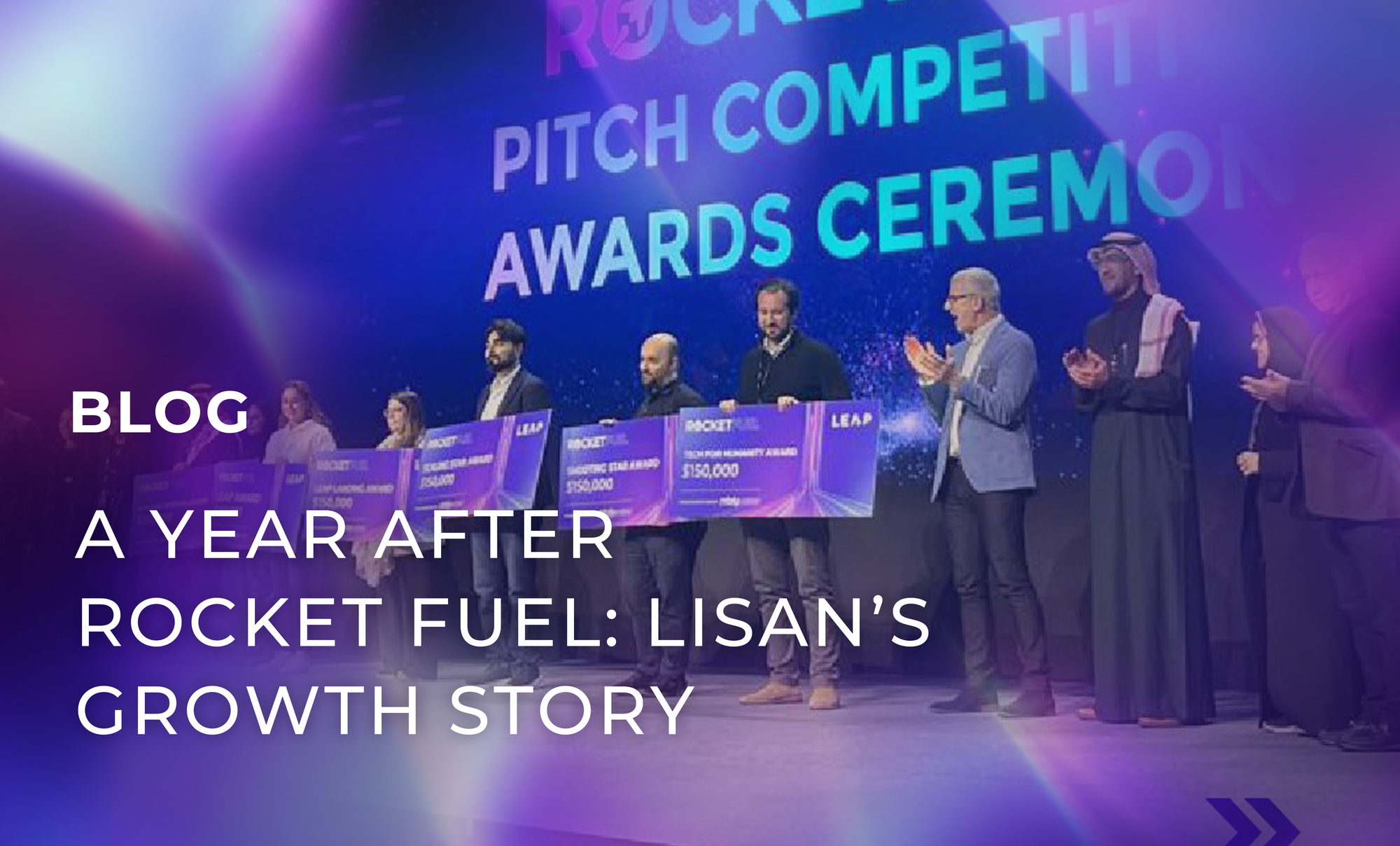
Discover how Rocket Fuel winner Lisan grew to $2.6 million ARR, secured government customers and scaled Arabic enterprise AI one year after LEAP 2025.
Discover how CubeSats are transforming space technology. From NASA's climate mission to maritime monitoring, these tiny satellites are making a big impact on science and innovation.
Discover how LEAP Rocket Fuel winner Daleela grew to 400,000 users, completed 8,000 consultations and expanded women's healthcare across the region.
Discover how Rocket Fuel winner Lisan grew to $2.6 million ARR, secured government customers and scaled Arabic enterprise AI one year after LEAP 2025.
Discover how CubeSats are transforming space technology. From NASA's climate mission to maritime monitoring, these tiny satellites are making a big impact on science and innovation.