
How Daleela grew to 400,000 users after Rocket Fue
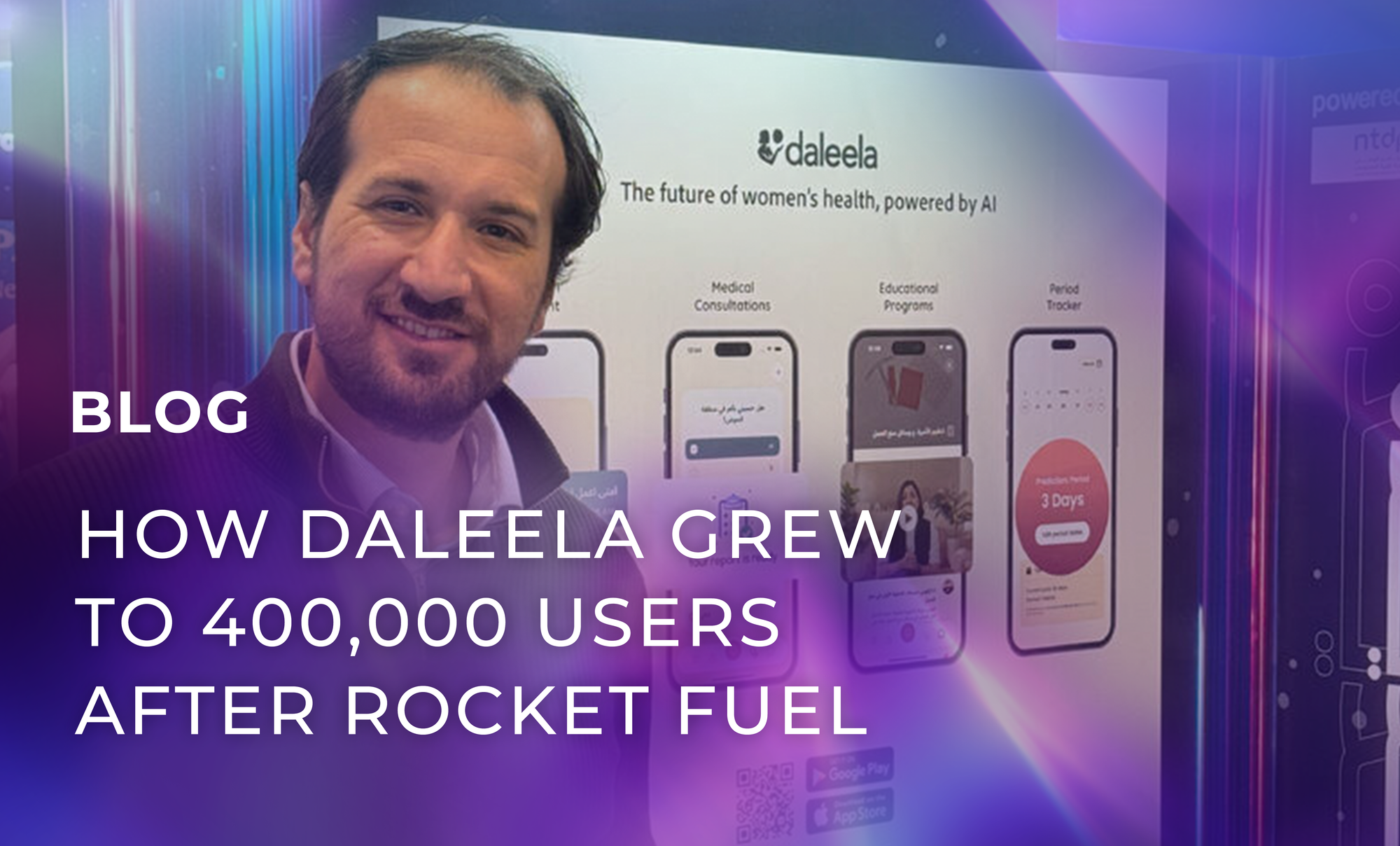
Discover how LEAP Rocket Fuel winner Daleela grew to 400,000 users, completed 8,000 consultations and expanded women's healthcare across the region.

Travel used to feel like a departure from your everyday life. You’d pack a suitcase and print a boarding pass, and step temporarily out of your routines. Work stayed at home, and so did your friendships.
But that separation is fading. Today, travel unfolds inside the same digital ecosystem as everything else: work, entertainment, identity, relationships and self-expression. The boundaries between ‘being online’ and ‘being away’ have become increasingly difficult to define.
And younger travellers, more than anyone else, are accelerating the shift. When we spoke to Andrew Fenner (Director General, WYSE Travel Confederation), he said:
“Younger travellers increasingly expect travel to function like the rest of their digital lives: instantly, intuitively and with as little friction as possible.”
It’s an expectation that’s changing what travel means. As Fenner added, younger travellers are now “far less willing to tolerate clunky systems, slow responses or disconnected experiences between inspiration, booking, payment and support.”
Conventionally, the travel industry treated journeys as isolated events. You researched destinations, booked transportation, took the trip and returned home. The experience had a clear beginning and end.
Now, that model doesn’t really reflect how people move through the world. Fenner noted that for many younger people, travel “overlaps with study, work, self-development and identity.”
You can already see this in action:
Travel has become woven into everyday life rather than existing outside it. And technology is enabling that convergence.
Cloud collaboration tools, digital payments, eSIMs, translation apps, AI assistants and social platforms have removed many of the barriers that once separated ‘travelling’ from ‘living’. A person can now move between countries while maintaining their usual routines and relationships through the device in their pocket. So instead of an interruption to daily life, travel now feels like a continuation of it.
One of the most obvious differences between travel today and travel a decade or two ago is where inspiration comes from.
To figure out where to go, you used to read a guidebook or visit a travel website, or maybe watch a travel show on TV. But now, destinations appear algorithmically: they’re folded into TikTok videos, Instagram reels, YouTube vlogs and group chats.
According to Skyscanner’s 2026 Gen Z travel research, TikTok is now the most popular source of travel inspiration for UK Gen Z travellers at 59%, followed by Instagram at 51%. The same report found that 88% of Gen Z travellers globally follow at least one travel influencer on TikTok.
This changes the psychology of travel completely.
People are no longer simply searching for places. They’re responding to moods and narratives. You decide to visit a city because of someone else’s lived experience: a late-night ramen shop in Tokyo, a hidden bookshop in Seoul, a train journey through the Alps filmed on a phone camera.
Fenner said:
“Discovery is also changing. Younger travellers are influenced by communities, creators and peer networks as much as by traditional travel brands.”
In this way, travel increasingly behaves like social media itself. It’s continuous and personalised, and community-driven. And importantly, the line between recommendation and reality is collapsing. Inspiration, booking, and the experience itself are all part of the same digital flow.
Alongside all of this, AI is changing how people organise and navigate travel. Skyscanner reports that 58% of UK Gen Z travellers now feel confident using AI to help plan and book trips – up from 38% the previous year.
That growth suggests that travel is changing from a transactional process into a conversational one. Instead of opening ten browser tabs to compare routes and prices, a growing number of travellers expect systems that can understand context:
One report from Amadeus, based on research with 9,500 travellers across seven global markets, found that 42% of travellers save time when using AI to plan trips, while 37% discover entirely new destinations through AI-assisted recommendations.
But convenience is only one element here. On a deeper level, tech is becoming ambient. Travel tools are now expected to work in the background – connecting payments, bookings, maps, translation, customer support and recommendations into one continuous experience.
But despite all this automation, younger travellers are also becoming more intentional about the choices they make.
Fenner noted:
“They want convenience, but they also want transparency. They are asking where their money goes, who benefits from their spending and what impact their travel has on the places they visit.”
You can see this reflected in a cultural shift across the internet. More and more people expect platforms to communicate values as well as services.
American Express’ 2026 Global Travel Trends report found that 83% of Millennials and Gen Z surveyed prioritise unique, authentic experiences over traditional tourist attractions, while 79% say they are likely to seek destination-specific workshops or local activities.
This desire for authenticity is changing how travel platforms work too. Instead of racing to be the fastest or the cheapest, the successful companies of the next decade might be the ones that create trust, context and a sense of meaningful connection.
Because more than just efficiency, travellers want experiences that feel human.
We think the most interesting thing about all of this is that travel no longer really feels like leaving.
Work follows us through laptops. Friends travel beside us through messaging apps. Entertainment streams instantly across borders, and AI assistants help us navigate unfamiliar cities in real time.
The old idea of stepping fully away from life has become harder to achieve because digital life itself has become portable.
As well as changing how we travel, tech has changed how we experience movement and connection. The journey now begins long before the airport and continues long after the return flight home.
As Fenner put it, the future of travel will depend on “smarter, more joined-up systems that combine convenience, trust, flexibility and purpose”.
The suitcase is still physical, and you still need a stamp in your passport. But travel now exists in the same current as the rest of our lives.
Discover how LEAP Rocket Fuel winner Daleela grew to 400,000 users, completed 8,000 consultations and expanded women's healthcare across the region.

Discover how Rocket Fuel winner Lisan grew to $2.6 million ARR, secured government customers and scaled Arabic enterprise AI one year after LEAP 2025.
Discover how CubeSats are transforming space technology. From NASA's climate mission to maritime monitoring, these tiny satellites are making a big impact on science and innovation.
Discover how LEAP Rocket Fuel winner Daleela grew to 400,000 users, completed 8,000 consultations and expanded women's healthcare across the region.
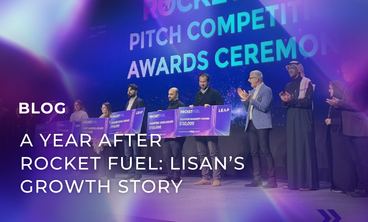
Discover how Rocket Fuel winner Lisan grew to $2.6 million ARR, secured government customers and scaled Arabic enterprise AI one year after LEAP 2025.
Discover how CubeSats are transforming space technology. From NASA's climate mission to maritime monitoring, these tiny satellites are making a big impact on science and innovation.