
Articles
What happens when AI becomes part of the team?
How AI agents, automation and hybrid workforces are changing enterprise teams in Saudi Arabia.

How AI agents, automation and hybrid workforces are changing enterprise teams in Saudi Arabia.
Why Saudi Arabia’s ‘fast-follower’ approach to AI and technology may be its biggest competitive advantage.
Discover how technology is transforming travel in 2026, blurring the boundaries between movement, work, identity and everyday life.
Explore three major tech breakthroughs of 2026, from fusion energy advances to space robotics and humanoid surgical systems.

Find out how water intelligence platforms are transforming infrastructure through smart meters, IoT sensors, cloud systems, and real-time analytics across global cities.
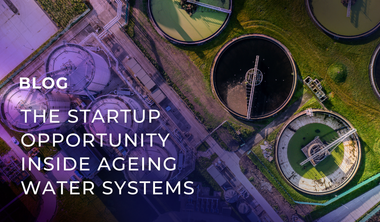
Ageing water infrastructure is creating new opportunities for startups in predictive maintenance, smart metering, infrastructure analytics, and water technology platforms.

Saudi Arabia’s SUSTAIN platform shows how AI can turn sustainability ambition into coordinated execution.
How Saudi Arabia is bringing together energy, infrastructure, and capital to build sovereign AI capability.
Drones, or unmanned aerial vehicles, are expected to proliferate around the world given their adaptability in civil and defence spheres. The uses of drones is truly unlimited: from looking for leaks in crude oil pipeline in remote locations, to providing food and medicine and emergence services in remote locations, monitoring,
Top AI Stats and Facts 2022 AI, which once was a subject of people’s imagination, is becoming a reality at lightspeed. The computer science field that focuses on the creation of machines that can replicate human behavior and mimic his competencies has already altered the way we think and
What legacy are you creating? And are you happy with it? “Since March 2020 we’ve witnessed one of the largest, fastest changes in consumer behaviour in history. And as customers rapidly started shifting their purchases online and started taking part in the digital economy, businesses were forced to respond
Saad Toma (General Manager at IBM) came to #LEAP22 to talk about AI. And with good reason: “Twenty years ago the prediction was that every company would become an internet company,” he said. “Now people are saying every company will become an AI company.” In 2019 research by Accenture found
“We can mobilise money into the Middle East and Africa, but unless we have that reliable pipeline of investible startups, we are not going to get anywhere.” The tech industry often puts the responsibility for securing investment very heavily on the shoulders of startup founders. But in reality, investments depend
There’s a gender gap in the tech industry. According to the Harvard Business Review, women fill only 26% of computer and mathematical science roles in the US; 15% of engineering roles; and only 24% of all technical positions, in spite of inclusion and diversity programs now being commonplace among
The sheer volume of data being generated by current technology has created the need for AI. New stats show that that 2.5 quintillion bytes of data are created every single day in 2022, and no team of humans could handle that in any meaningful way. But during his keynote